USDT TRC20 vs ERC20 Difference: Which is Best?
The main USDT TRC20 vs ERC20 difference comes down to the blockchain network they operate on: Tron and Ethereum. TRC20 runs on the Tron network, offering near-instant transfers and fees that usually cost less than a dollar. ERC20 runs on Ethereum, which boasts massive liquidity and decentralized finance (DeFi) support, but often charges steep gas fees for simple transfers. Choosing the right network depends entirely on whether you prioritize cheap payments or smart contract compatibility.
Understanding the Core USDT TRC20 vs ERC20 Difference
Tether (USDT) is a centralized stablecoin pegged to the US dollar, but it does not have its own blockchain. Instead, the company issues the token across multiple existing networks to reach different users. ERC20 is the technical standard for tokens on the Ethereum blockchain. TRC20 is the equivalent token standard for the Tron blockchain.
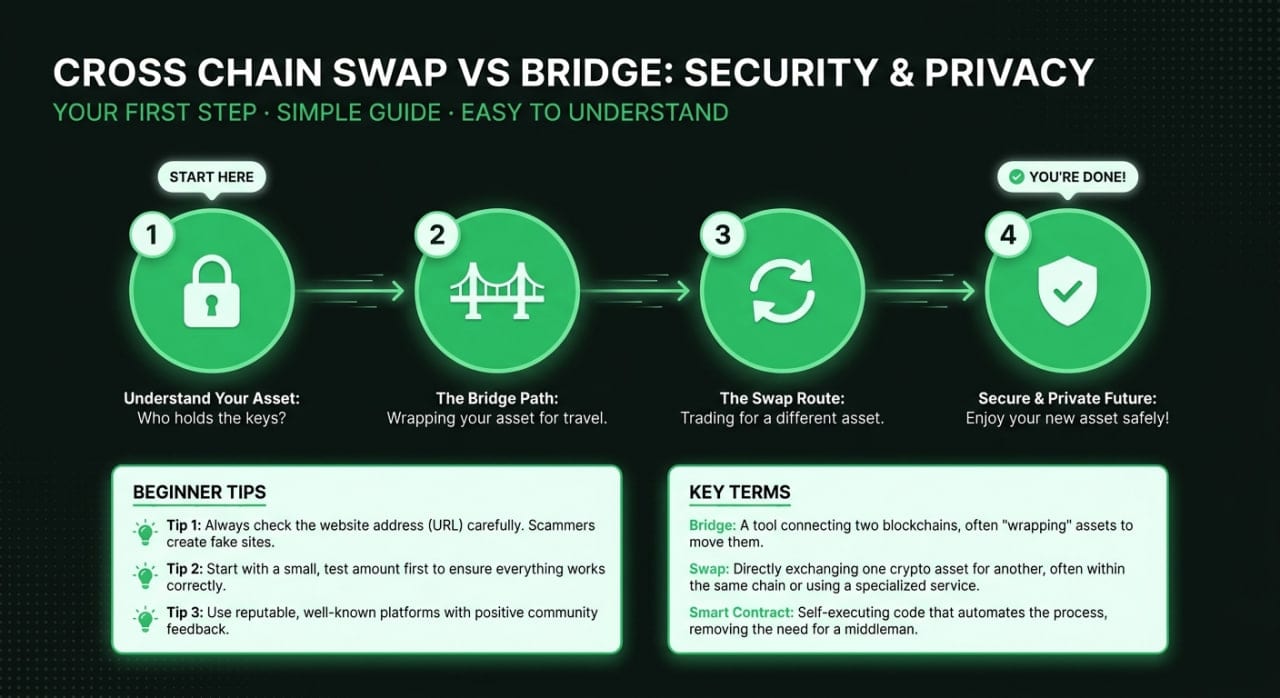
Because these networks operate independently, a USDT token on Ethereum cannot communicate directly with a USDT token on Tron. You are essentially dealing with two different versions of the same asset. To move value between them, you must use an exchange or a cross-chain bridge.
Network Fees and Transaction Speeds Compared
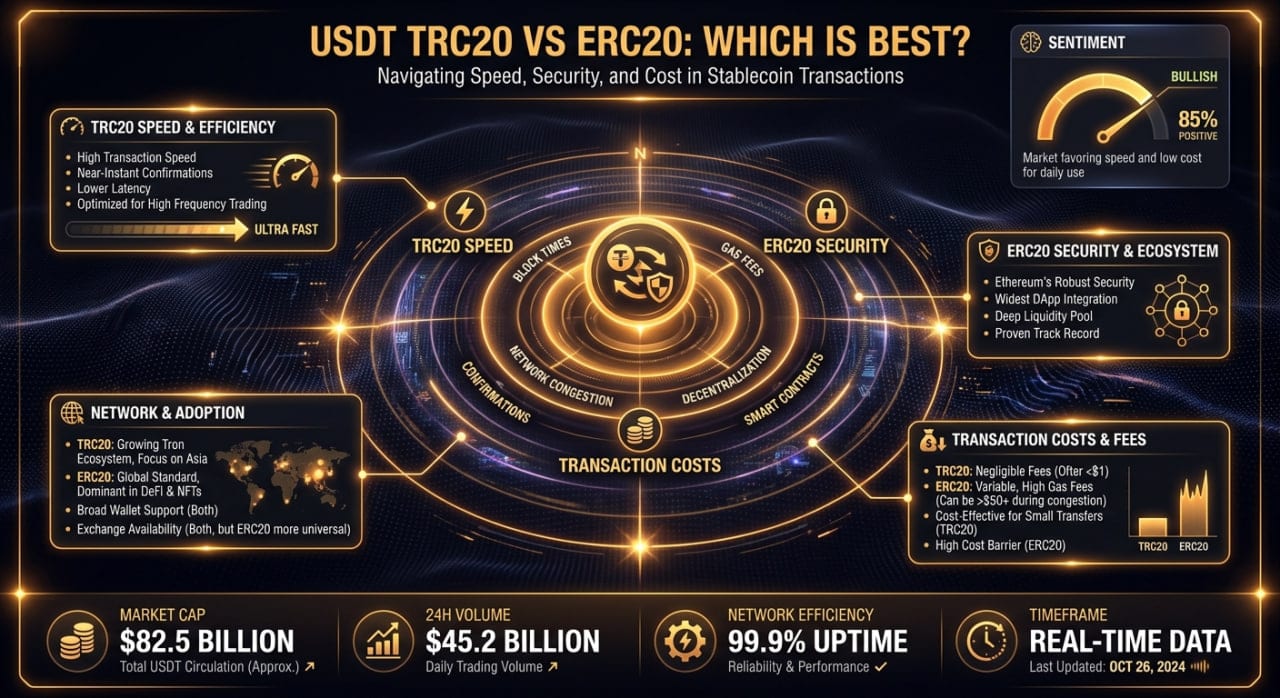
If you are moving funds between self-custody wallets or paying for a service, network fees are usually the deciding factor. Ethereum gas fees fluctuate based on network congestion and block space demand. A simple ERC20 token transfer can cost anywhere from $2 to $30 or more during peak market activity. [HUMAN VERIFY: current average ETH gas fee for ERC20 transfers]
Tron uses a different resource model based on bandwidth and energy, which keeps transaction costs drastically lower. Sending TRC20 USDT typically costs between $0.50 and $1.50 in network fees, regardless of how busy the broader crypto market gets.
Speed also favors Tron for basic transfers. Tron generates a new block every three seconds, meaning your recipient usually sees the funds almost immediately. Ethereum block times hover around 12 seconds, and exchanges often require more block confirmations for ERC20 deposits, making you wait longer for the funds to clear.
Wallet Compatibility and Address Formats
Sending tokens to the wrong network can result in a permanent loss of funds. You can easily tell the difference between the two networks by looking at the receiving address. Ethereum (ERC20) addresses always begin with "0x" and contain a string of alphanumeric characters. Tron (TRC20) addresses always begin with a capital "T".
Almost every major hardware wallet, including Ledger and Trezor, supports both standards. However, you must ensure you have the native gas token for the respective network to move your funds later. You need ETH to send ERC20 USDT, and you need TRX to send TRC20 USDT. If you only hold Tether in a self-custody wallet without the native gas coin, your funds will be stuck until you deposit some to cover the network fee.
How to Choose the Right Network for Your Needs
Selecting the best network depends on what you intend to do with the stablecoin. If your goal is to hold dollars off-exchange, pay a vendor, or move funds quickly between platforms, Tron is the pragmatic choice. If you plan to lend your stablecoins on Aave, trade on Uniswap, or interact with complex smart contracts, Ethereum is mandatory.
When using a non-custodial service like MistySwap to swap BTC to USDT, you must provide a receiving address that matches the specific network you selected. Sending an ERC20 token to a TRC20 address will cause the swap to fail.
Here is a quick checklist to determine which network to use:
- Check the recipient's supported networks: Ensure the destination wallet or exchange explicitly accepts the network you want to use.
- Verify the address format: Look for "0x" for Ethereum or "T" for Tron before confirming the withdrawal.
- Assess your gas reserves: Confirm you hold enough ETH or TRX in your sending wallet to cover the network fee.
- Evaluate your end goal: Choose Tron for cheap peer-to-peer payments, or Ethereum for DeFi integrations.
Privacy Considerations for Tether Users
Neither TRC20 nor ERC20 offers native privacy. Both Ethereum and Tron are entirely transparent public ledgers. Anyone who knows your wallet address can view your current balance, your entire transaction history, and the exact time you moved funds.
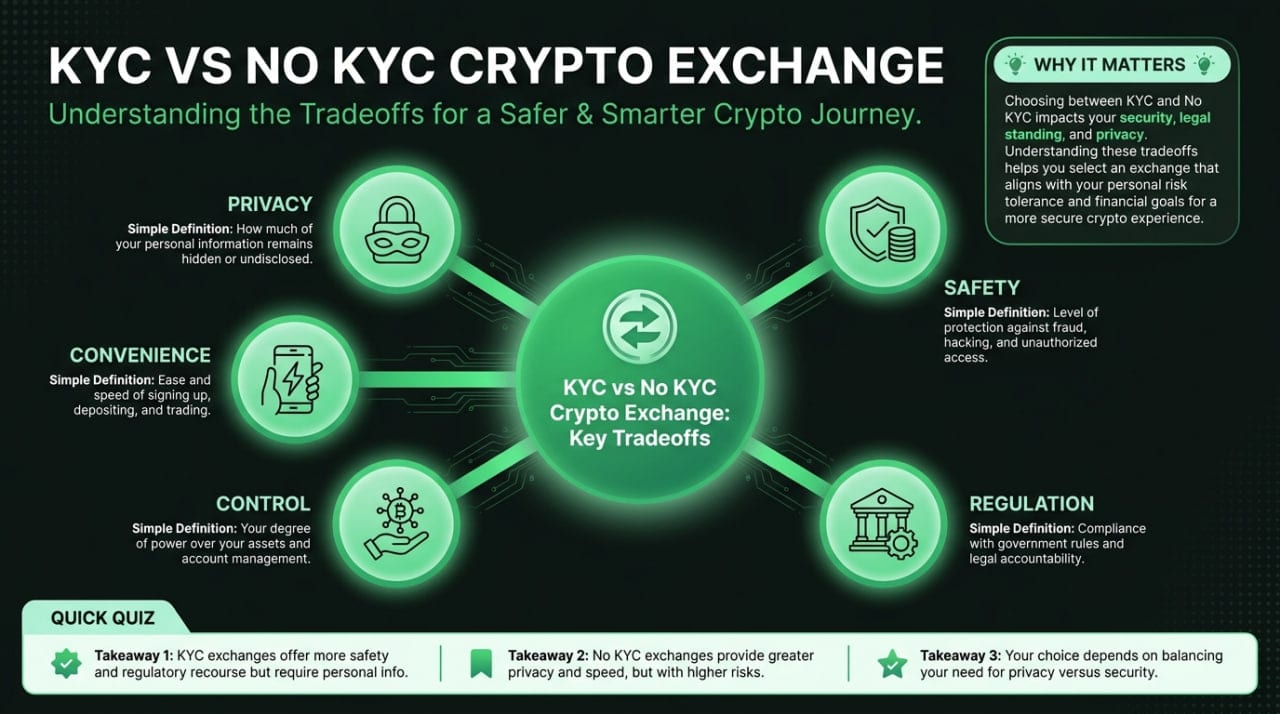
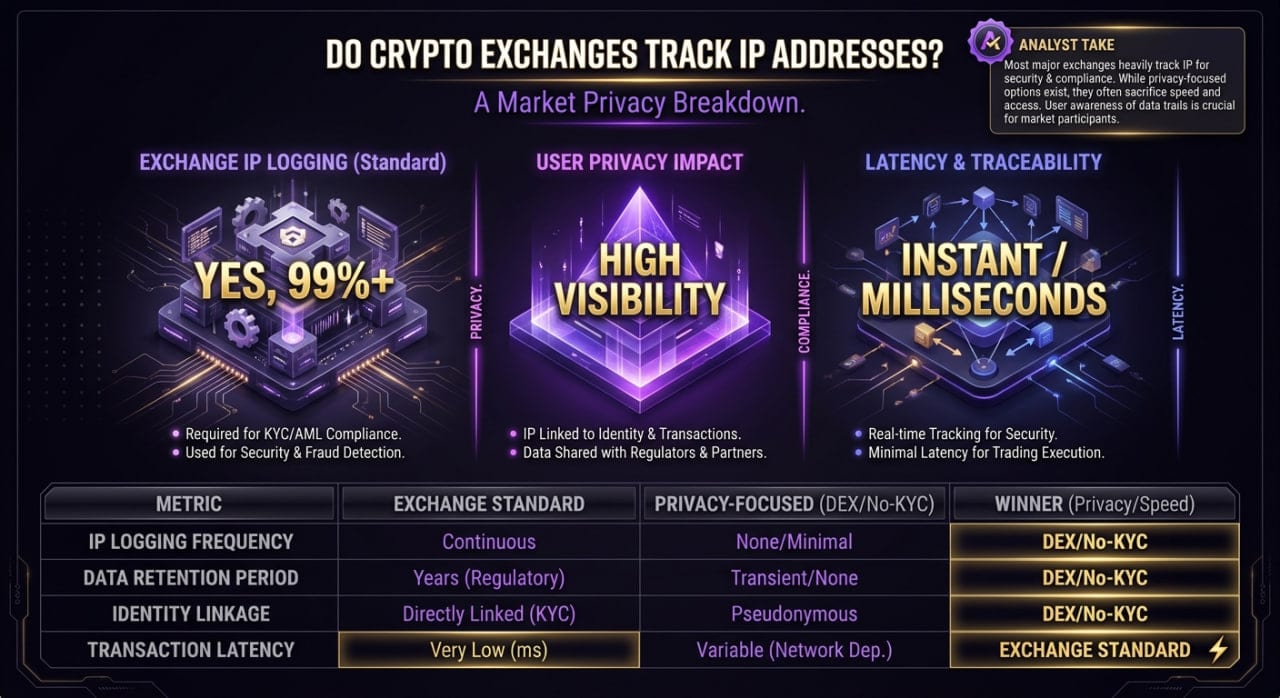
Address reuse is a major privacy leak on both networks. If you withdraw USDT from a centralized exchange to your hardware wallet, that exchange links your identity to that address permanently. Using a No-KYC instant swap service helps mitigate this by breaking the direct link to your centralized exchange accounts. Understanding how the swap process works allows you to route funds into fresh, unlinked self-custody addresses without handing over your ID.
FAQ
Can I send USDT TRC20 to an ERC20 address?
No. Tron and Ethereum are completely separate blockchains. If you attempt to send TRC20 tokens to an ERC20 address, the transaction will either fail or your funds will be permanently lost. Always verify the network matches the address format before sending.
Why are Ethereum network fees so much higher than Tron?
Ethereum processes a massive volume of complex smart contract transactions, creating high demand for limited block space. Users must bid against each other using gas (ETH) to get their transactions processed. Tron uses a delegated proof-of-stake system with higher throughput, keeping basic token transfers cheap.
Is TRC20 safer than ERC20?
Both networks are highly secure, but Ethereum is generally considered more decentralized and battle-tested than Tron. For short-term transfers and basic self-custody, the security difference for the average user is negligible. The bigger risk is user error, such as sending funds to the wrong network.
How do I know which USDT network my wallet uses?
Look at the receive address in your wallet app. If it starts with "0x", it is an Ethereum (ERC20) address. If it starts with a "T", it is a Tron (TRC20) address. Most modern multi-coin wallets allow you to generate addresses for both networks.
Informational only — not financial, legal, or tax advice.