Do Crypto Exchanges Track IP Addresses?
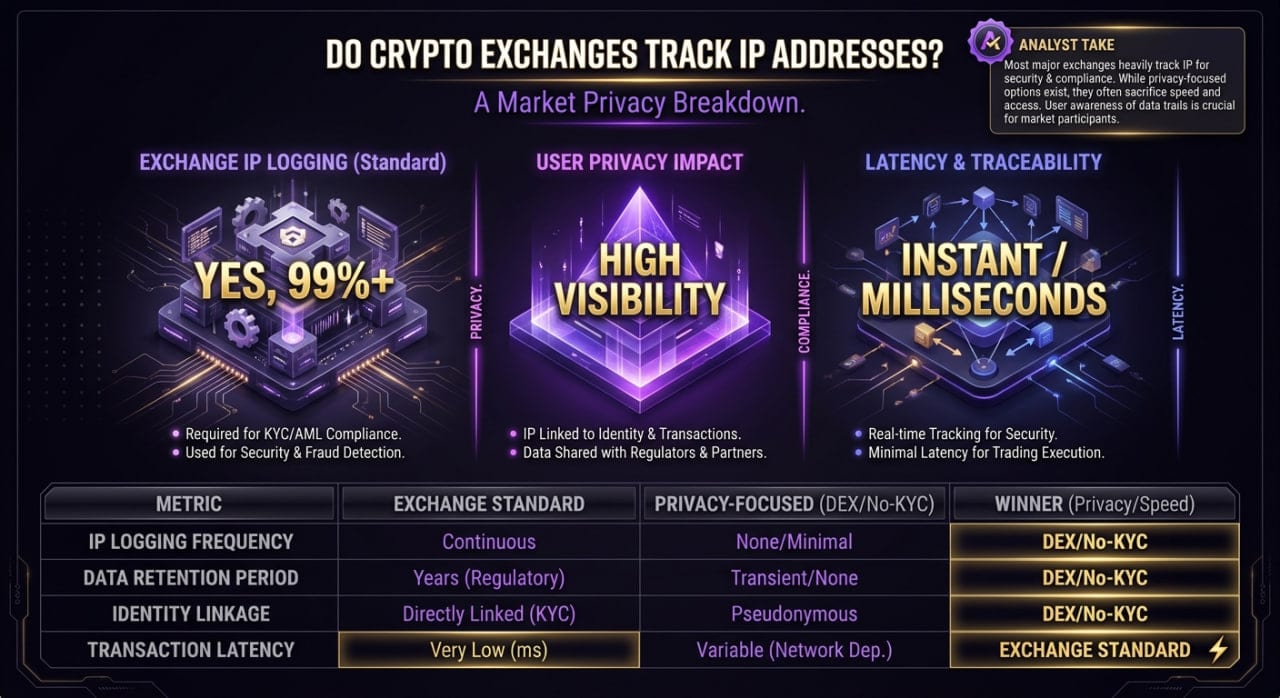
Yes, almost all centralized platforms log your network data the moment you load their website or open their app. If you are wondering, "do crypto exchanges track IP addresses," the reality is that they collect this metadata even on accounts that skip formal identity verification. This means your trading activity is tied directly to your physical location and internet service provider unless you take specific precautions.
Why Do Crypto Exchanges Track IP Addresses?
Centralized exchanges (CEXs) operate under strict regulatory frameworks that mandate constant surveillance of user activity. They log IP addresses primarily to enforce geo-restrictions, ensuring users from banned jurisdictions cannot access their order books. If an exchange detects an IP from a restricted country, they will immediately freeze the associated account and demand identity documents.
Security teams also use this network data to flag suspicious login attempts. For example, if an account typically accesses the platform from a European IP address and suddenly logs in from Asia, the system triggers an automatic lock. While framed as a security feature, this constant monitoring creates a permanent record connecting your home network to your on-chain financial history.
The Hidden Metadata Centralized Platforms Collect
Many users assume that skipping the ID upload step keeps them anonymous. However, centralized platforms build comprehensive shadow profiles using background telemetry. They gather this data through JavaScript execution in your browser and API calls from their mobile applications.
Here is the metadata centralized crypto exchanges typically collect:
- IP Addresses: Logs of every login, trade, and withdrawal tied to your network.
- Device Fingerprints: Data on your operating system, browser type, installed fonts, and screen resolution.
- Session Timestamps: Exact records of when you log in and how long you stay active.
- Withdrawal Addresses: A permanent link between your exchange account and your self-custody wallet.
- ISP Information: Details about your internet service provider and general physical location.
How IP Address Tracking Defeats "No-KYC" Accounts
Registering for a centralized exchange with just an email address provides a false sense of privacy. If you access that account from your home Wi-Fi, the exchange immediately links your trading activity to your physical household. When you eventually withdraw funds to a self-custody wallet, that blockchain address becomes permanently associated with your IP profile.
This data sharing extends far beyond the exchange itself. Law enforcement agencies frequently subpoena IP logs from centralized platforms to deanonymize users. Even if the exchange suffers a data breach, your network information and withdrawal addresses can leak to malicious actors, exposing your crypto holdings to targeted physical or digital attacks.
The Threat of Blockchain Analytics Integration
Centralized exchanges do not operate in a vacuum; they share their metadata with blockchain analytics firms. Companies like Chainalysis and Elliptic ingest exchange withdrawal data to map out the broader cryptocurrency ecosystem. When an exchange hands over your IP address and withdrawal destination, these firms use heuristics to track where your coins go next.
If you send funds from your exchange-linked wallet to a secondary hardware wallet, analytics software clusters those addresses together. Because the initial withdrawal was tied to your home IP address, every subsequent transaction you make on a public ledger carries that original deanonymization risk.
Protecting Your Privacy with No-Log Swaps
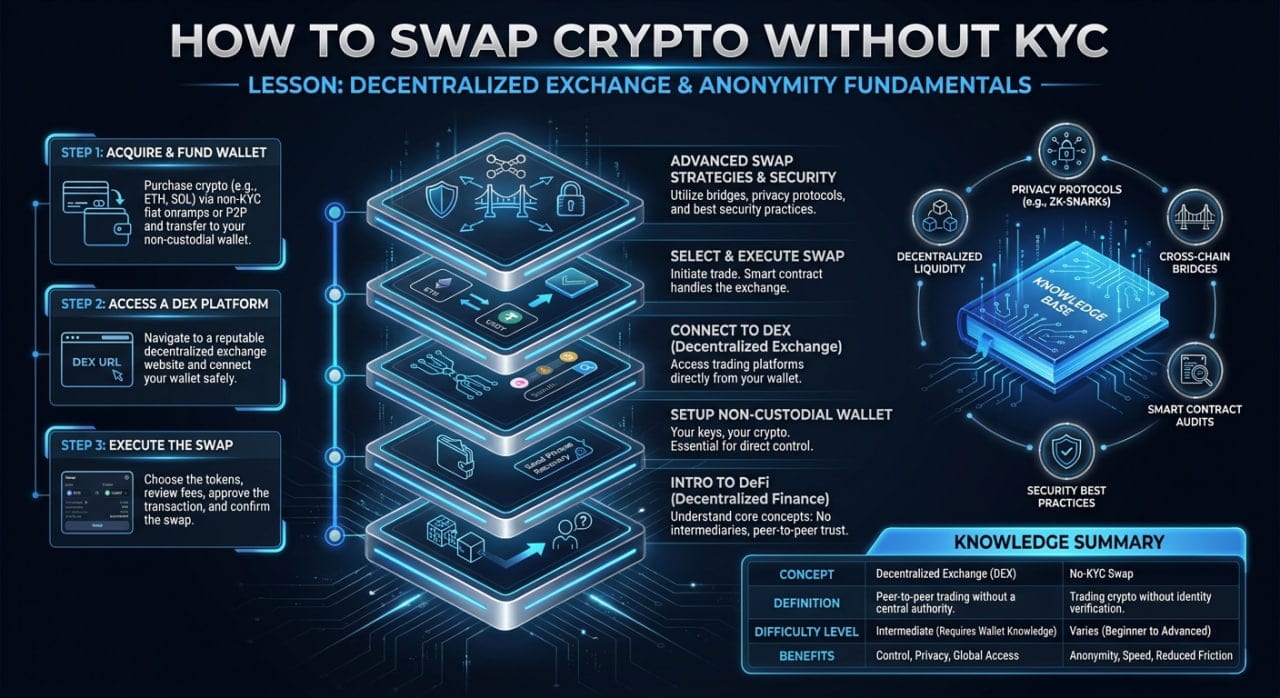
To maintain true financial privacy, you must separate your network identity from your on-chain activity. This requires moving away from centralized platforms that require accounts and relying on non-custodial infrastructure. Privacy-focused services do not require user registration, meaning there is no account profile to attach an IP address to.
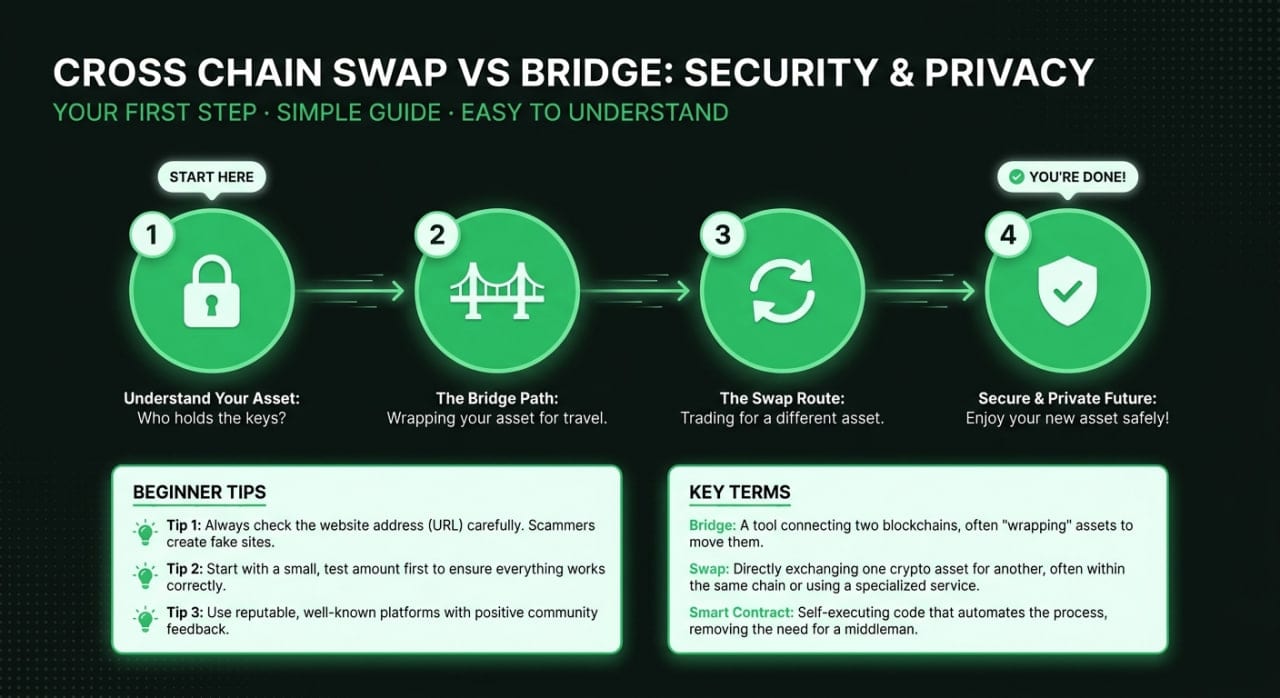
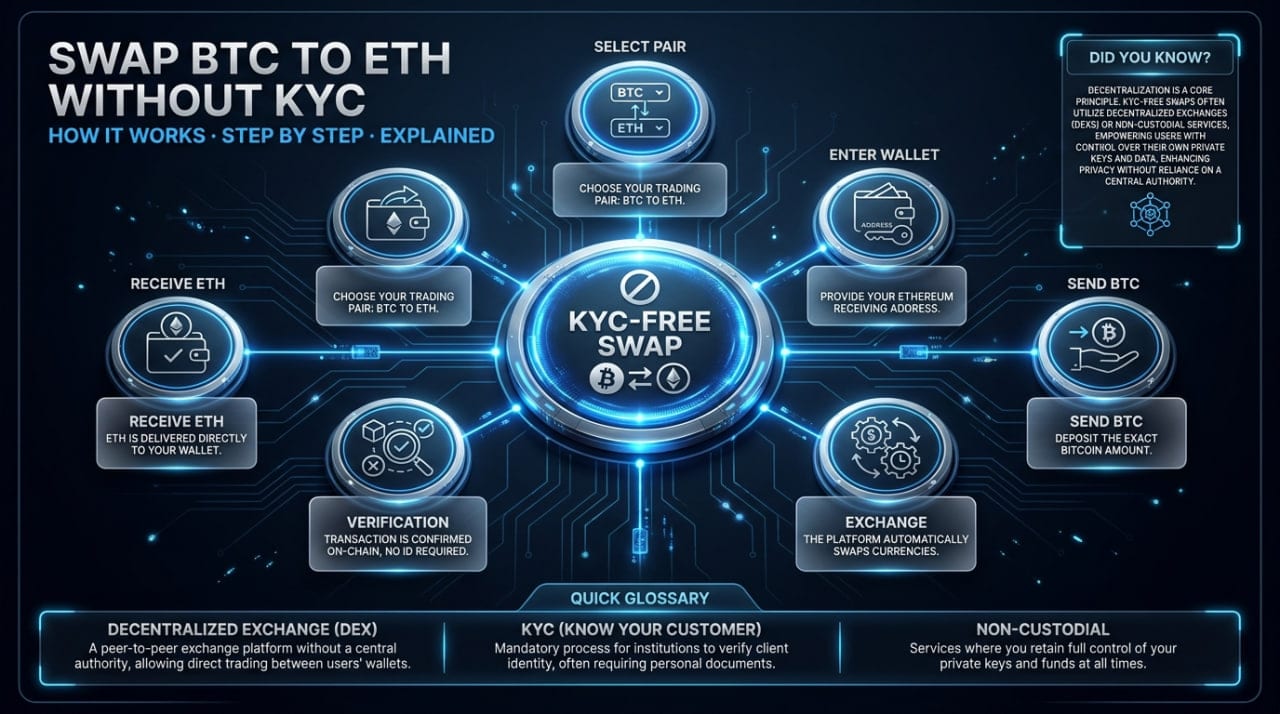
For example, using a no-log service like MistySwap allows you to exchange assets directly from your own wallet. Understanding how the swap process works is straightforward: you generate a one-time deposit address, send your funds, and receive the converted asset at your destination wallet. Whether you want to swap BTC to ETH or move into stablecoins like when you swap BTC to USDC, the platform never holds your funds or builds a behavioral profile. You retain full custody, and your network data remains disconnected from your long-term storage addresses.
FAQ
Can a VPN hide my IP address from a crypto exchange?
A Virtual Private Network (VPN) masks your real IP address by routing your traffic through a remote server. However, many centralized exchanges actively block known VPN IP ranges or flag accounts using them for immediate KYC verification. While a VPN protects your network data, it cannot prevent the exchange from logging your device fingerprint or withdrawal addresses.
Do decentralized exchanges (DEXs) track IP addresses?
Historically, DEXs did not track users, but this has changed as regulatory pressure increases. Several major decentralized exchange frontends now log IP addresses and actively block users from restricted regions. To avoid this, privacy-conscious users often interact directly with the smart contracts or use alternative, privacy-respecting frontends.
How long do crypto exchanges keep IP logs?
Data retention policies vary by jurisdiction, but most centralized exchanges keep IP logs and user metadata for a minimum of five years. This retention period often applies even if you delete your account and request data removal. [HUMAN VERIFY: Check specific data retention laws for financial institutions in your target jurisdiction].
Informational only — not financial, legal, or tax advice.