Cross Chain Swap vs Bridge: Security & Privacy
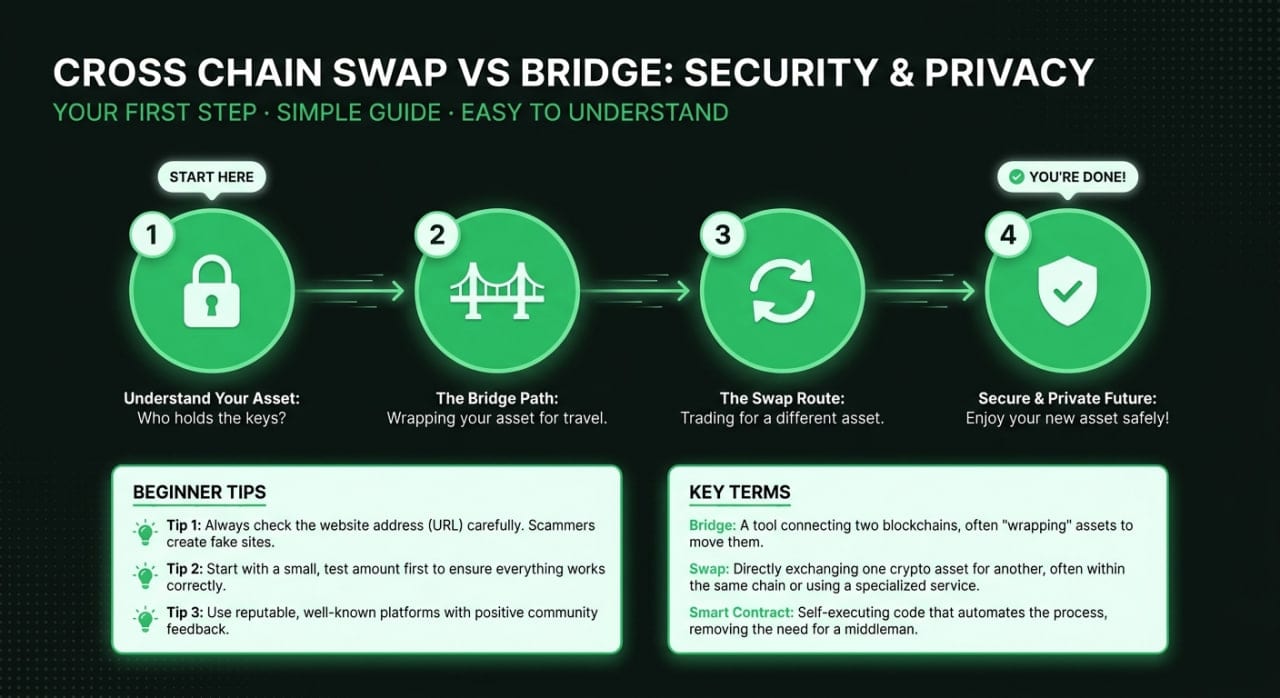
When deciding between a cross chain swap vs bridge, the safest and most private method depends entirely on whether you want native assets or wrapped IOU tokens. Bridges lock your original coins in a smart contract and issue a wrapped version on the destination chain, creating massive honeypots for hackers. Cross-chain swaps exchange native assets directly between separate blockchains, removing smart contract risk and breaking deterministic on-chain links.
How Bridges Work: The Wrapped Token Vulnerability
Bridges do not actually move your cryptocurrency from one network to another. Instead, they rely on a "lock and mint" mechanism to simulate cross-chain transfers. You send your native asset to a smart contract on the source chain, which locks it inside a vault. The bridge protocol then mints a wrapped token on the destination chain representing your initial deposit.
This architecture creates a severe security vulnerability. The smart contracts holding the locked assets become highly lucrative targets for attackers. If a hacker exploits a bug in the bridge's code or compromises the validator keys, they can drain the locked native assets. When the vault is emptied, the wrapped tokens on the destination chain instantly lose their backing and their market value drops to zero.
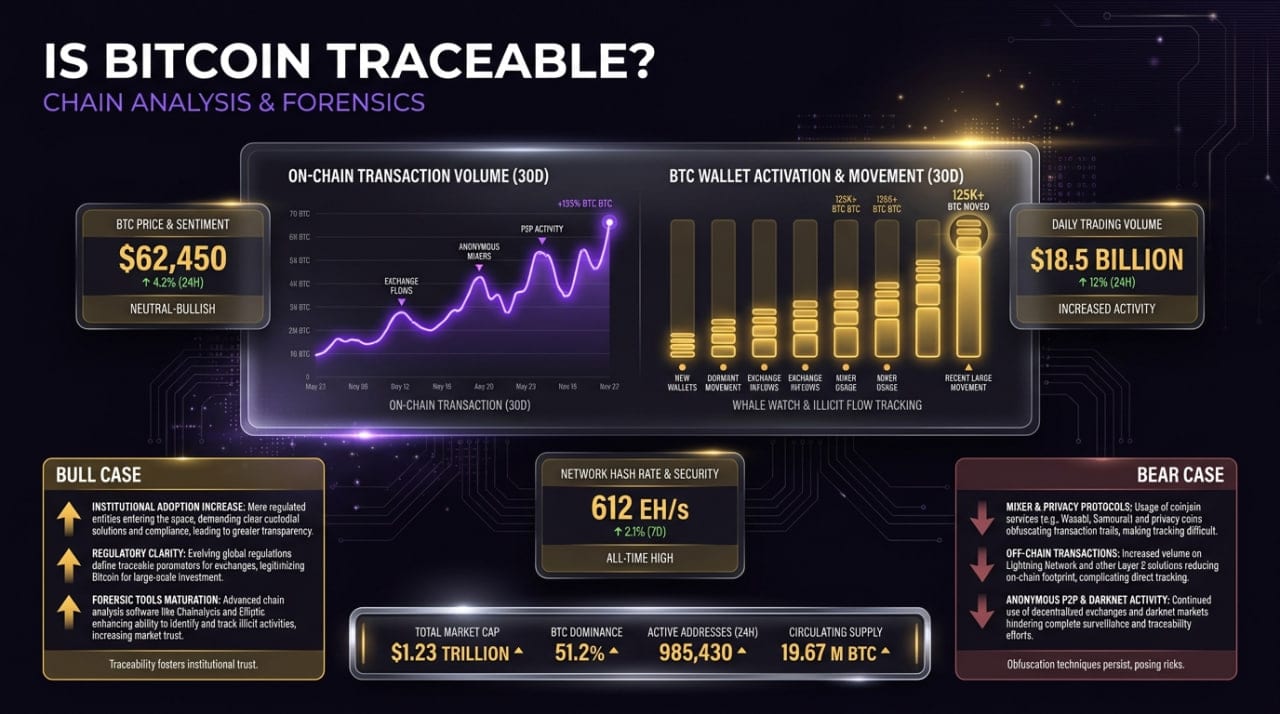
From a privacy perspective, bridges operate as highly transparent centralized choke points. Blockchain analytics tools can easily trace your transaction from the source chain, through the bridge contract, directly to your new address on the destination chain. Observers can see exactly how much you locked and the exact moment your new wallet received the wrapped funds.
How Cross Chain Swaps Work: Native Asset Exchange
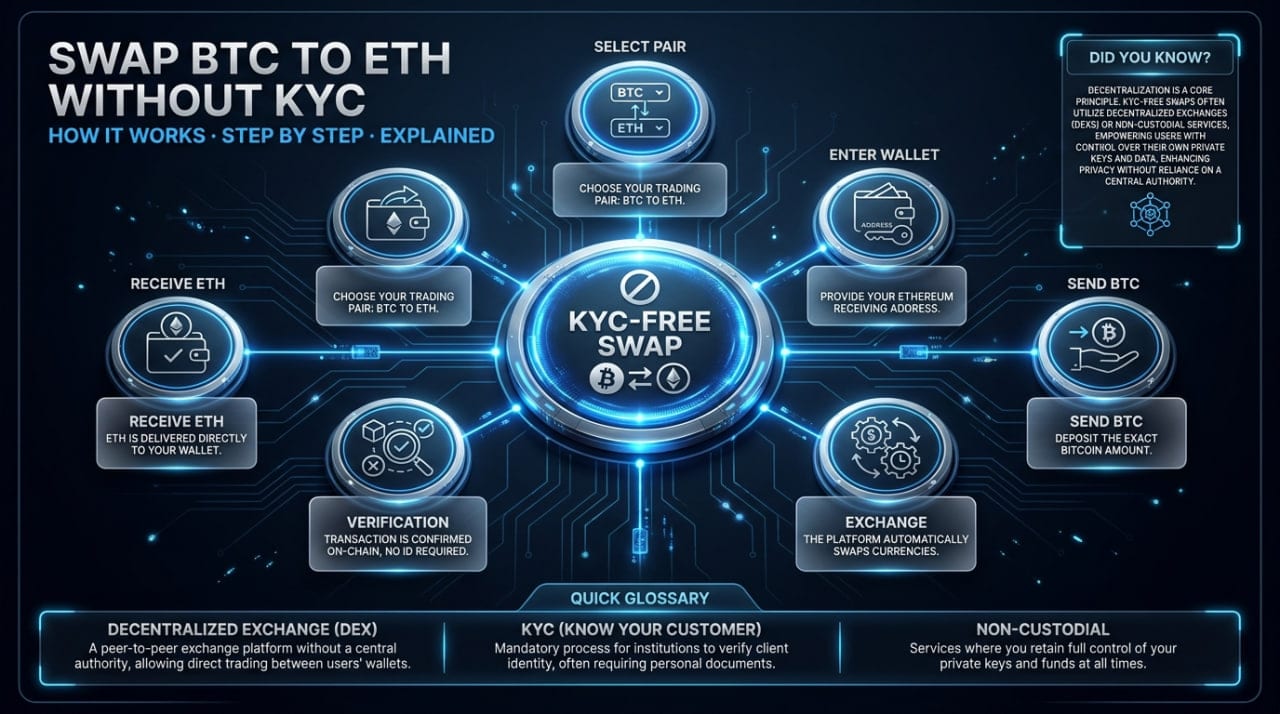
A cross-chain swap takes a completely different technical approach by exchanging native assets without ever issuing wrapped tokens. If you want to swap BTC to ETH, you send native Bitcoin to a specific, one-time deposit address. The swap provider detects the deposit, calculates the exchange rate, and sends native Ethereum directly to your destination wallet from their own independent liquidity pools.
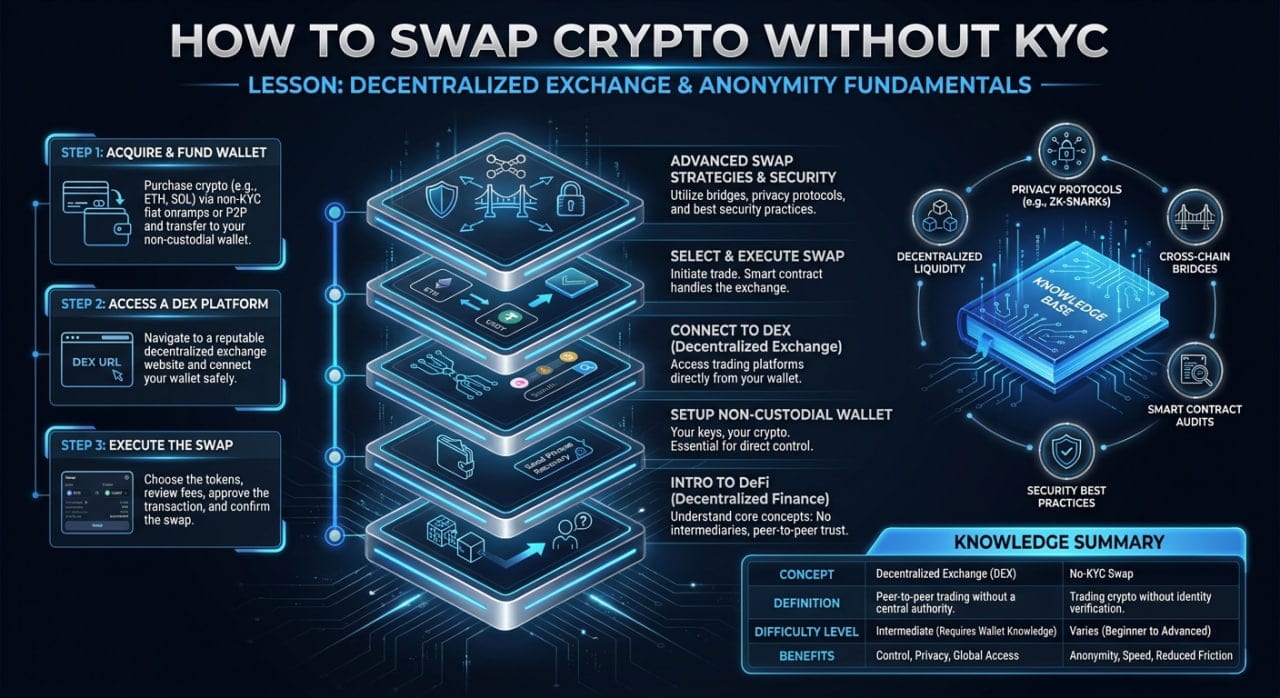
This process eliminates the need for vulnerable smart contract vaults. Platforms like MistySwap facilitate these non-custodial, no-KYC instant swaps without requiring you to create an account or verify your identity. You simply provide a receiving address, send the funds, and wait for the network confirmations to clear.
Because you receive native assets, you do not carry any ongoing platform risk once the transaction completes. You pay the standard network fees for the respective blockchains, and the exchange handles the routing in the background. If you want to understand the exact mechanics behind the scenes, you can read more about how the swap process works.
Cross Chain Swap vs Bridge: Security Comparison
The security profiles of these two methods differ fundamentally. Bridge security relies on the ongoing, perpetual integrity of a smart contract. You must trust that the code has no hidden bugs, the private keys controlling the bridge are secure, and the network validators will not collude to steal the funds.
Cross-chain swaps isolate your risk strictly to the brief window of the transaction itself. Once the swap provider sends the native asset to your self-custody wallet, the transaction is final and irreversible. Even if the swap platform were completely compromised the following day, the coins sitting in your hardware wallet remain completely unaffected.
This makes swaps significantly safer for long-term holding. You hold the actual asset on its native blockchain, secured by that specific network's own consensus mechanism. You never have to worry about waking up to find that your tokens have been depegged because a third-party bridge was exploited overnight.
Privacy Differences: Breaking the On-Chain Link
Privacy-conscious users generally avoid bridges because they create a permanent, deterministic link between your old and new addresses. When you use a bridge, the exact amounts and timestamps make it trivial for heuristic analysis to cluster your wallets across different blockchains. Anyone looking at a block explorer can connect your Ethereum identity to your Polygon or Arbitrum identity.
Instant swaps offer superior privacy because they break this direct on-chain link. The swap provider receives your funds into one address and sends your new coins from an entirely different, unrelated liquidity wallet. Since no accounts, emails, or IDs are tied to the transaction, your on-chain footprint is heavily obfuscated.
Here is how to maximize privacy during a cross-chain swap:
- Use a fresh destination address: Never send swapped funds to an address you have previously used or linked to a centralized exchange.
- Avoid round numbers: Swap randomized amounts (like 0.142 BTC instead of 0.15 BTC) to make amount-based blockchain tracking much harder.
- Use a VPN or Tor: Mask your IP address when accessing the swap interface to prevent network-level logging by internet service providers.
- Wait between transactions: If doing multiple swaps, space them out over different days and times to avoid temporal clustering.
Choosing Between a Cross Chain Swap vs Bridge
Your choice ultimately depends on what you intend to do with the assets after moving them. If you need to interact with a specific decentralized finance (DeFi) protocol that only accepts a certain wrapped token, a bridge might be your only viable option. However, you must accept the systemic risks associated with holding those wrapped assets long-term.
If your goal is to move value across networks securely and hold it in self-custody, a cross-chain swap is the superior choice. You retain the security of native blockchains and avoid leaving a clear trail for blockchain surveillance firms. Before initiating a transaction, always verify the all supported coins and networks to ensure the platform has sufficient native liquidity for your desired route.
FAQ
Are cross-chain bridges safe to use?
Bridges carry significant smart contract risk and have been the target of the largest hacks in crypto history. When you use a bridge, you must trust the code and the validators securing the locked assets. If the bridge is exploited, your wrapped tokens will likely become worthless.
Do cross-chain swaps require KYC?
Many non-custodial instant swap platforms operate without requiring Know Your Customer (KYC) verification. You do not need to provide an ID, email, or create an account to use them. You simply generate a swap, send the funds to the provided deposit address, and receive your new coins.
Why are wrapped tokens considered risky?
Wrapped tokens are essentially IOUs issued by a smart contract. Their value depends entirely on the native assets locked in the bridge's vault on another blockchain. If that vault is hacked or mismanaged, the wrapped token loses its backing and cannot be redeemed for the original asset.
How long does a cross-chain swap take?
The duration depends entirely on the block times and confirmation requirements of the two blockchains involved. A swap involving fast networks like Solana or Polygon might complete in under a minute. Swaps involving Bitcoin typically take 10 to 30 minutes, depending on network congestion and mining speeds.
Informational only — not financial, legal, or tax advice.