


The Role of Decentralized Identity in Enhancing Privacy for Crypto Swaps
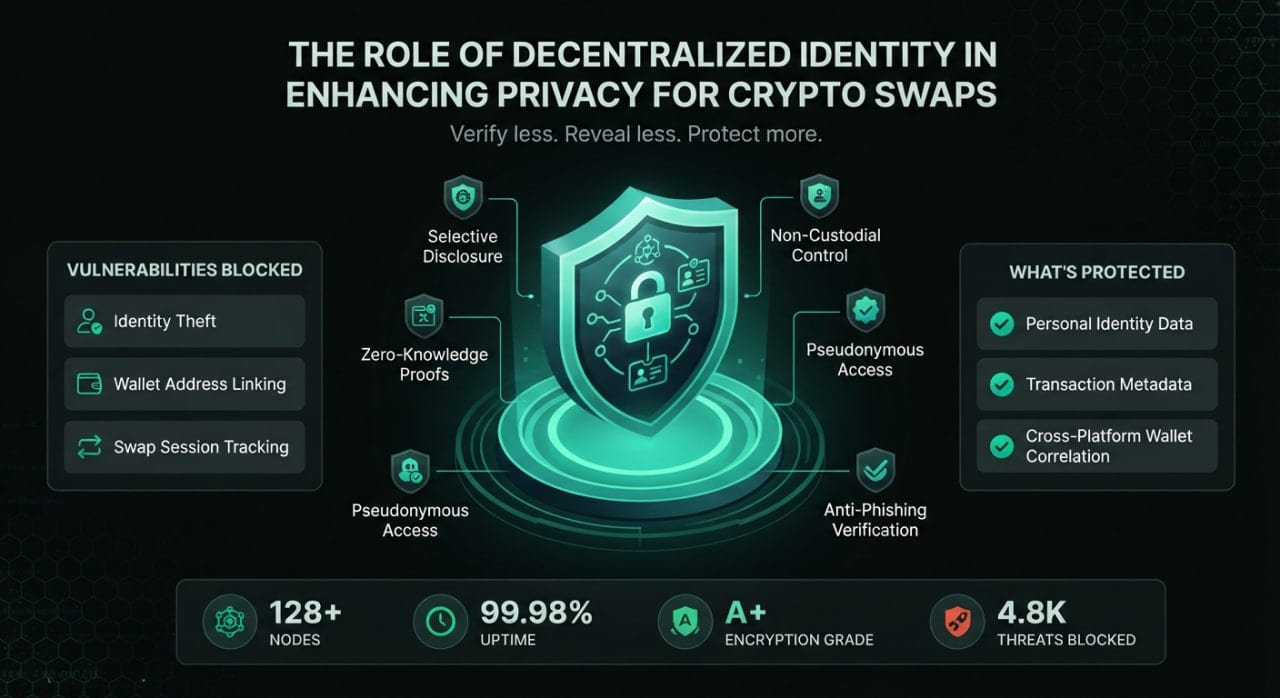
Decentralized finance (DeFi) has introduced a myriad of protocols that enable users to conduct transactions without the need for intermediaries. However, the requirement for Know Your Customer (KYC) processes in many traditional finance systems poses significant challenges to privacy and user autonomy in decentralized exchanges (DEXs). This article explores how decentralized identity (DID) solutions can eliminate the necessity for KYC while maintaining user privacy, particularly in the context of non-custodial swaps, such as those facilitated by MistySwap.
Architectural Problem: Privacy vs. Compliance
The core issue arises from the tension between regulatory compliance and user privacy. Traditional KYC processes require users to disclose personal information, which can lead to data breaches and misuse. In contrast, decentralized identity frameworks allow users to prove their identity without revealing sensitive information, thus preserving their privacy while still complying with regulatory requirements.
Decentralized Identity Frameworks
DIDs utilize blockchain technology to create a self-sovereign identity that users control. These identities are anchored on decentralized networks, allowing users to generate cryptographic proofs of identity without disclosing their actual data. The W3C DID specification outlines several key components:
- DID Documents: These JSON-LD formatted documents contain public keys and service endpoints, enabling interaction with various decentralized applications (dApps).
- Verifiable Credentials: Users can receive credentials from issuers (e.g., universities, governments) that can be cryptographically verified without revealing the underlying data.
- Decentralized Identifiers: Unique identifiers that are created, owned, and managed by the user, which can be used across multiple platforms.
Integration with Non-Custodial Swaps
In the context of non-custodial swaps, such as those facilitated by MistySwap, integrating DID solutions can enhance privacy while mitigating risks associated with transaction linkability. For instance, when executing a swap, a user can utilize a DID to authenticate their identity without exposing personal information. This allows for:
- Privacy-preserving transactions: By using zero-knowledge proofs (ZKPs), users can prove they meet certain criteria (e.g., age, residency) without revealing their identity.
- Reduced transaction linkability: By separating identity from transaction data, the risk of front-running attacks (e.g., MEV and sandwich attacks) can be minimized. This is particularly relevant in public mempool dynamics, where transaction visibility can lead to exploitative practices.
Case Studies on Decentralized Identity Projects
Several projects have successfully implemented decentralized identity solutions to enhance privacy in crypto transactions:
- Sovrin: A global public utility for decentralized identity, Sovrin allows users to manage their identities securely while providing verifiable credentials. Its integration with various DeFi platforms demonstrates the potential for privacy-preserving identity verification.
- uPort: This platform enables users to create a self-sovereign identity and manage their credentials. uPort's architecture allows users to interact with Ethereum-based applications without exposing their identities, aligning well with the ethos of non-custodial swaps.
- SelfKey: A blockchain-based identity system that allows users to manage their digital identity and conduct KYC processes without compromising privacy. SelfKey's integration with various exchanges allows users to perform swaps while maintaining control over their personal data.
Practical Instructions for Self-Custodial Asset Rotation
- Create a Decentralized Identity: Use a DID provider (e.g., Sovrin, uPort) to create your identity. Ensure you generate a secure key pair and back up your recovery phrases.
- Obtain Verifiable Credentials: Engage with issuers to receive credentials that can be linked to your DID. Ensure these credentials are stored securely.
- Connect to MistySwap: Use your DID to authenticate on MistySwap. This will allow you to perform swaps without revealing your identity.
- Execute Swaps: When executing a swap, leverage gas-efficient multi-hop paths to optimize transaction costs. Monitor the public mempool for potential MEV risks and adjust your transaction parameters accordingly.
- Maintain Privacy: Regularly rotate your public keys associated with your DID to minimize linkability of your transactions.
Frequently Asked Questions
Q1: How does a decentralized identity enhance privacy in crypto swaps? A1: A decentralized identity allows users to authenticate without revealing personal information, thus preserving their privacy while complying with necessary regulations.
Q2: What are the risks associated with using DIDs in non-custodial swaps? A2: Risks include potential vulnerabilities in the DID infrastructure and the possibility of credential misuse if not managed securely. Users should employ best practices for key management.
Q3: Can I use my DID across multiple platforms? A3: Yes, DIDs are designed to be interoperable across various platforms, allowing users to maintain a consistent identity while engaging in different decentralized applications.
Q4: How can I protect myself from front-running attacks when using DIDs? A4: Utilize privacy-enhancing technologies like zero-knowledge proofs and monitor the mempool for transaction visibility. Additionally, consider using transaction obfuscation techniques to reduce linkability.
Informational only — not financial, legal, or tax advice.
Share this article
Related articles
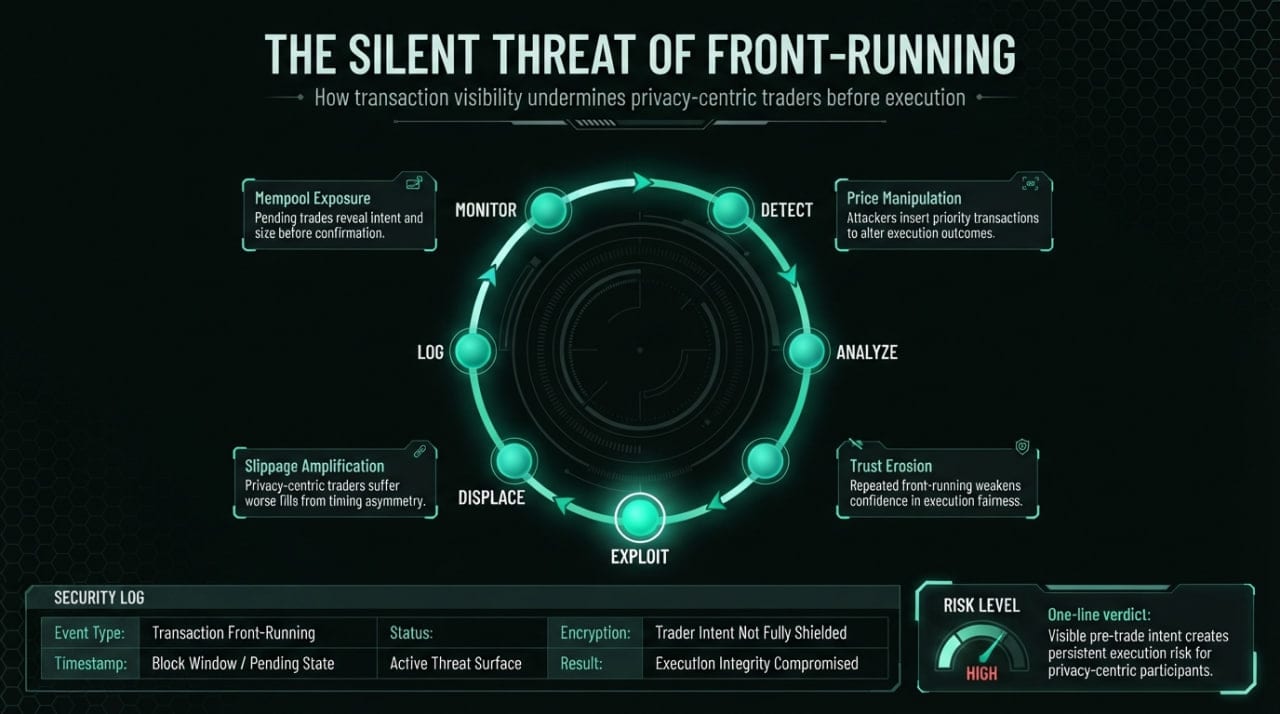 Security & SafetyThe Silent Threat of Front-Running: Understanding Its Impact on Privacy-Centric Traders
July 7, 2026 · 8 min read
 EducationImplementing Smart Order Routing for Enhanced Trade Execution
July 8, 2026 · 6 min read
 Market AnalysisComparative Analysis of No-KYC Swap Services: Protocol Features and User Experience
July 7, 2026 · 8 min read