


The Silent Threat of Front-Running: Understanding Its Impact on Privacy-Centric Traders
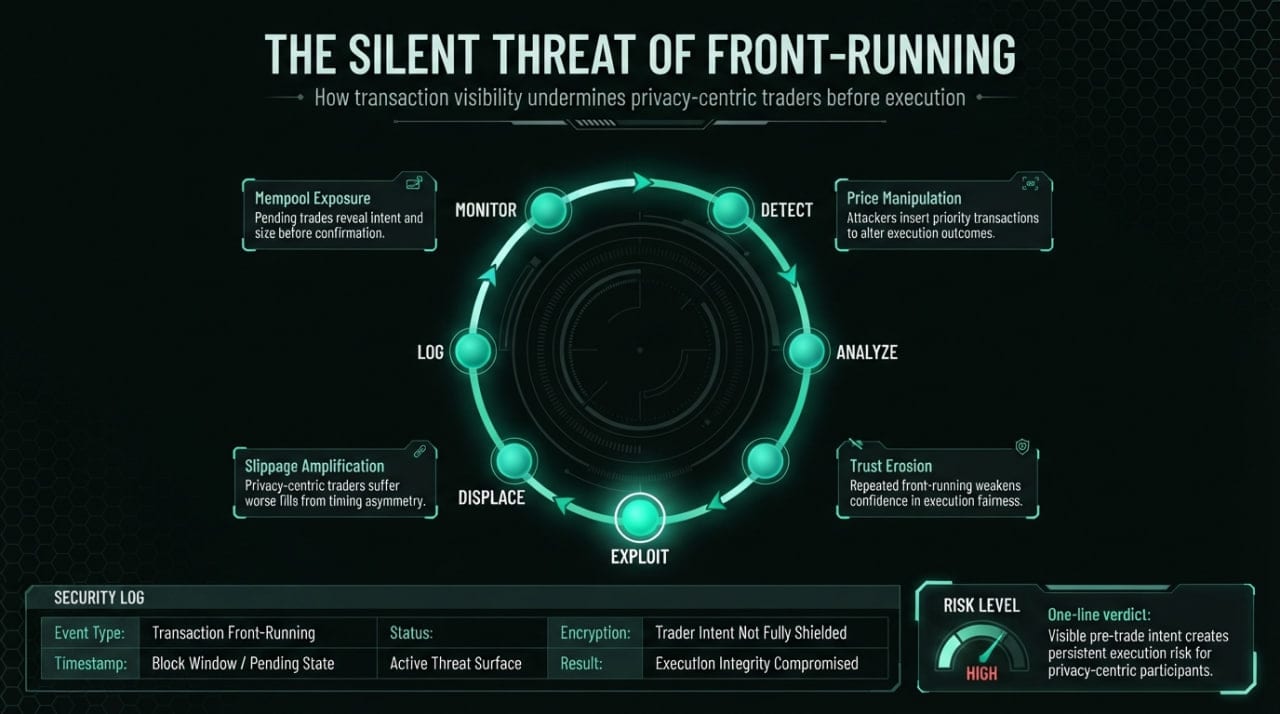
Front-running poses a significant risk to privacy-centric traders, particularly in decentralized exchanges (DEXs) like MistySwap. This phenomenon not only undermines the integrity of trading practices but also directly impacts user privacy, a core tenet of non-custodial architectures designed to minimize surveillance and data exploitation.
Front-Running Defined
Front-running occurs when a trader (often a bot) anticipates a pending transaction and executes their own transaction first, profiting from the price movement before the original transaction is executed. This practice is especially prevalent in high-frequency trading environments but has increasingly infiltrated decentralized finance (DeFi).
Key Mechanisms of Front-Running
- Transaction Ordering: In public blockchains, miners (or validators) have discretion over transaction ordering. A profitable transaction can be prioritized, enabling front-runners to capitalize on predicted price changes.
- Gas Fee Manipulation: By increasing gas fees, front-runners can incentivize miners to prioritize their transactions, leading to faster execution at the expense of the original trader.
- Order Book Dynamics: DEXs often utilize automated market makers (AMMs) with liquidity pools. Manipulating liquidity and slippage parameters allows front-runners to exploit price inefficiencies.
Front-Running Incidents in DEXs
Several documented cases illustrate the impact of front-running in DEX environments. For instance, in 2021, a front-running bot exploited a large trade on Uniswap, resulting in a significant price decrease for the asset involved. The original trader faced slippage that eroded potential profits, highlighting the vulnerability of DEX users to such attacks.
- Incident Analysis:
- Initial Transaction: User initiates a swap of 10 ETH for a token. - Front-Running Execution: A bot observes the pending transaction and places a buy order before the original transaction can execute. - Resulting Impact: The token price increases due to the bot's purchase, causing the original transaction to execute at a higher price, creating substantial slippage.
Implications for Privacy-Centric Traders
The rise of front-running directly contradicts the ethos of privacy-centric trading platforms like MistySwap. Traders who prioritize anonymity must be aware of the additional risks posed by front-running. The anonymization of transactions does not mitigate the threat posed by front-runners who can exploit transaction visibility in the mempool.
Transaction Heuristics and User Privacy
Privacy-centric architectures employ various strategies to obfuscate user identities. However, front-running exploits some of the inherent transparency of blockchain technology:
- Wallet Address Linking: Each transaction is publicly visible, allowing for potential linking of wallet addresses to user identities, especially when users engage in repeated trading patterns.
- Transaction Heuristics: Analyzing transaction timing, size, and frequency can lead to the identification of trading strategies, thus compromising user privacy.
- Slippage Parameters: In environments with high volatility, slippage can amplify the effects of front-running. Traders may need to set slippage tolerances higher than desired to ensure successful transactions, inadvertently exposing them to front-running risks.
Mitigation Strategies
Traders can take several steps to minimize exposure to front-running:
- Private Transaction Protocols: Utilizing privacy-enhancing technologies, such as zk-SNARKs or CoinJoin, can obscure transaction details, although this may introduce trade-offs regarding transaction efficiency.
- Proactive Gas Management: Setting competitive gas prices can reduce the likelihood of front-runners successfully executing their transactions first.
- Decentralized Solutions: Engaging with platforms that incorporate privacy-preserving features, such as MistySwap, can minimize the risks associated with front-running.
The Future of Privacy-Centric Trading
As the DeFi landscape evolves, so too must the defenses against front-running. Privacy-centric protocols need to innovate continuously, balancing usability with robust privacy measures. The challenge lies in maintaining user anonymity while ensuring transaction efficiency.
- Technological Innovations: Emerging technologies, such as layer-2 solutions, may provide avenues to enhance transaction privacy while decreasing the likelihood of front-running.
- Regulatory Considerations: Increased scrutiny and potential regulatory frameworks around front-running practices could lead to enhanced protections for traders in DEX environments.
Conclusion
Front-running represents a silent yet profound threat to privacy-centric traders, particularly within decentralized exchanges. Understanding its dynamics and implications is crucial for users who wish to protect their financial privacy while engaging in the DeFi space. As technology advances, so too must the strategies to combat these risks.
FAQ
1. What is front-running in the context of decentralized exchanges? Front-running is the practice of executing a transaction based on knowledge of a pending transaction to profit from the resulting price movement.
2. How does front-running impact privacy-centric trading platforms like MistySwap? Front-running can compromise the anonymity of users by exploiting transaction visibility, leading to financial losses through increased slippage and altered pricing.
3. What strategies can traders employ to mitigate front-running risks? Traders can use privacy-focused technologies, manage gas prices proactively, and engage with platforms designed to enhance transaction privacy.
4. Are there regulatory measures being considered to address front-running in DeFi? Regulatory scrutiny may increase, leading to potential frameworks aimed at protecting traders and enhancing transparency in transaction practices.
Share this article
Related articles
 Market AnalysisComparative Analysis of No-KYC Swap Services: Protocol Features and User Experience
July 7, 2026 · 8 min read
 Education2026 Decentralized Privacy Strategy: Practical Insights and Strategies
July 6, 2026 · 8 min read
 Crypto Basics / Beginners2026 Blockchain Privacy Playbook: Essential Insights and Strategies
July 5, 2026 · 8 min read