


Comparative Analysis of No-KYC Swap Services: Protocol Features and User Experience
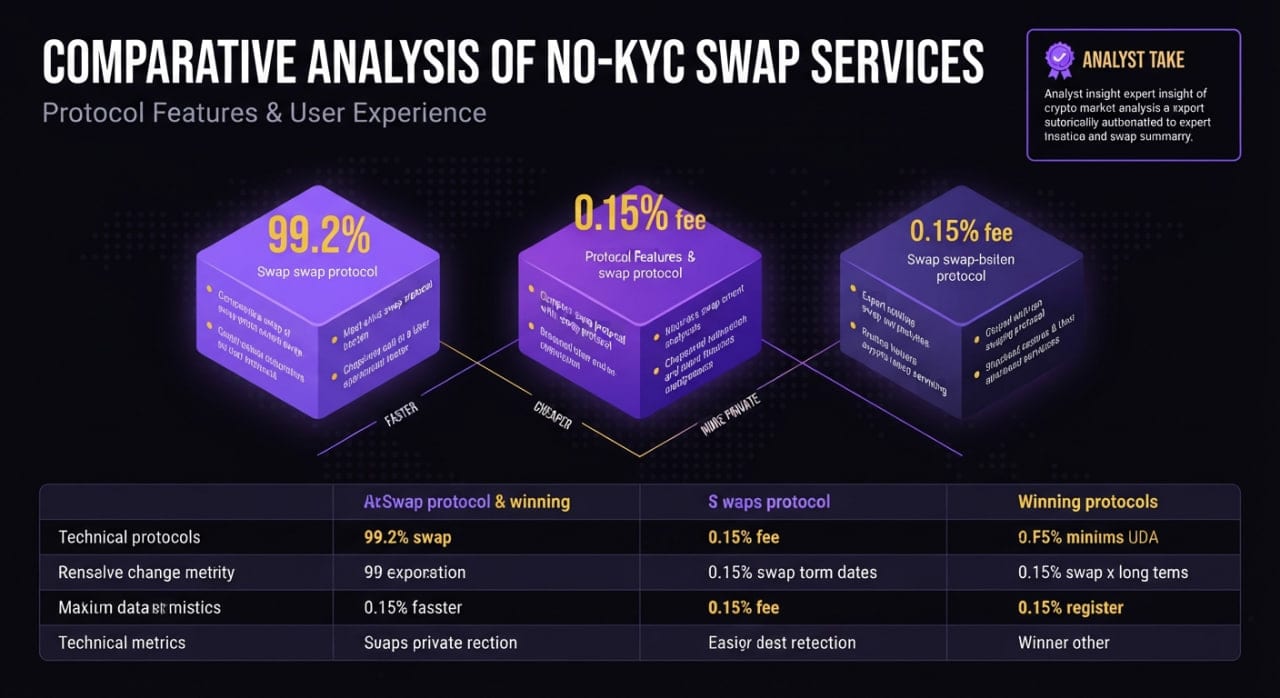
No-KYC (Know Your Customer) swap services have emerged as a response to the increasing regulatory scrutiny on cryptocurrency transactions. These platforms allow users to swap assets without undergoing identity verification, thus appealing to users who prioritize privacy and decentralization. This article examines the technical features, user interface, and operational security of various no-KYC swap services, with a particular focus on protocols such as Thorchain, and their approaches to facilitating user swaps.
Protocol Features
Decentralization and Non-Custodial Models
No-KYC swap services typically operate on decentralized models that do not require user funds to be held in a centralized wallet. Instead, these services utilize smart contracts to execute trades directly from users' wallets.
- Thorchain employs an Automated Market Maker (AMM) model where liquidity providers supply liquidity pools for various tokens. Users are able to swap assets directly without failing back to a centralized order book.
- MistySwap follows a similar non-custodial approach, enabling users to perform swaps while maintaining control over their private keys.
The non-custodial nature of these services reduces the risk of hacks and exploits that are often associated with centralized exchanges, where large amounts of user funds can be targeted.
Liquidity Routing
Effective liquidity routing is critical for the efficiency of swaps. Services like Thorchain utilize cross-chain liquidity to facilitate swaps between different blockchain networks without requiring users to go through a centralized exchange.
- Thorchain intelligently routes trades to the most liquid pools available, minimizing slippage and optimizing for the best exchange rates.
- Other services may rely on liquidity aggregators that connect to multiple decentralized exchanges (DEXs) to source liquidity, enhancing trade execution but potentially complicating the user experience.
Slippage Management
Slippage occurs when the execution price of a trade differs from the expected price due to market fluctuations. No-KYC swap services implement various mechanisms to manage slippage.
- Thorchain allows users to set slippage tolerance levels before executing a trade, providing a clear understanding of potential price variations.
- In contrast, other platforms may impose default slippage settings which can lead to unexpected outcomes for users who do not adjust these parameters.
Protocol Interoperability
Interoperability is crucial in no-KYC swaps, particularly for services that aim to facilitate cross-chain transactions. Thorchain stands out in this regard, as it supports a range of blockchains, allowing seamless swaps between disparate ecosystems.
- This interoperability is achieved through the use of “RUNE,” native to Thorchain, which acts as a liquidity asset to facilitate swaps across different tokens.
- Other services may focus solely on specific chains, limiting their utility for users seeking to swap assets across multiple networks.
User Interface and Experience
Design and Usability
User interface (UI) design plays a significant role in the overall experience of no-KYC swap services. A well-designed UI can significantly reduce the friction associated with executing trades.
- Thorchain’s interface is relatively straightforward, providing users with clear navigation and real-time updates on liquidity and swap rates, which is crucial for making informed decisions.
- In contrast, some other no-KYC platforms may exhibit cluttered interfaces that can overwhelm users, particularly those who are less experienced with cryptocurrency trading.
Transaction Transparency
Transparency in transaction processing builds trust among users. Many no-KYC swap services offer real-time transaction tracking and feedback mechanisms that inform users about the status of their swaps.
- Thorchain implements transaction confirmations and provides users with details on the estimated time of completion.
- Some services may lack this level of transparency, leaving users uncertain about the progress of their transactions.
Customer Support
No-KYC services often operate with limited customer service due to their decentralized nature. However, the availability of support channels can vary significantly.
- Thorchain has community-driven support via forums and social media, which can be beneficial for users seeking assistance.
- Other platforms may not offer as robust a support structure, leaving users to rely on self-help resources.
Operational Security
Smart Contract Audits
Operational security is paramount in decentralized finance (DeFi). Smart contracts should undergo rigorous auditing to identify vulnerabilities that could be exploited.
- Thorchain has undergone multiple audits by reputable firms, providing a certain level of assurance regarding the security of its code.
- Some no-KYC services may not have undergone thorough audits, which could expose users to risks associated with poorly written smart contracts.
Address Clustering and Privacy
While no-KYC services provide a degree of anonymity, users should be aware of the limits of privacy techniques employed by these platforms.
- Transactions on the blockchain are inherently transparent, and while no-KYC services do not require identity verification, patterns in transaction data can still lead to address clustering and potential identification by external entities.
- Techniques such as coin mixing or using privacy-focused wallets can help obfuscate transaction history, but they come with trade-offs regarding usability and risk of error.
Regulatory Considerations
The regulatory landscape surrounding no-KYC swap services is complex and varies by jurisdiction. Users should remain informed about their local laws regarding cryptocurrency transactions to avoid potential legal implications.
- Although no-KYC services aim for privacy, they are not immune to scrutiny from regulatory bodies that may require compliance depending on the jurisdiction.
Conclusion
The landscape of no-KYC swap services presents various options for users prioritizing privacy and decentralization. Protocols like Thorchain offer innovative approaches to liquidity routing and interoperability, enhancing user experience and operational security. However, users must remain aware of the inherent risks and limitations associated with these services. Understanding the technical features and trade-offs involved is essential for making informed decisions in the evolving world of decentralized finance.
FAQs
- What is the main advantage of no-KYC swap services?
No-KYC swap services allow users to trade cryptocurrencies without identity verification, enhancing privacy and facilitating access for those who prefer to remain anonymous.
- How do I minimize slippage when using a no-KYC swap service?
Users can adjust slippage tolerance settings before executing trades, ensuring they have control over the price impact on their transactions.
- What should I consider regarding the security of no-KYC swap services?
It is essential to consider whether the service has undergone smart contract audits and to understand the implications of blockchain transparency on user privacy.
- Are there any legal risks associated with using no-KYC swap services?
Yes, legal risks can vary by jurisdiction, and users should be aware of local regulations surrounding cryptocurrency transactions.
This content is informational, not financial advice.
Share this article
Related articles
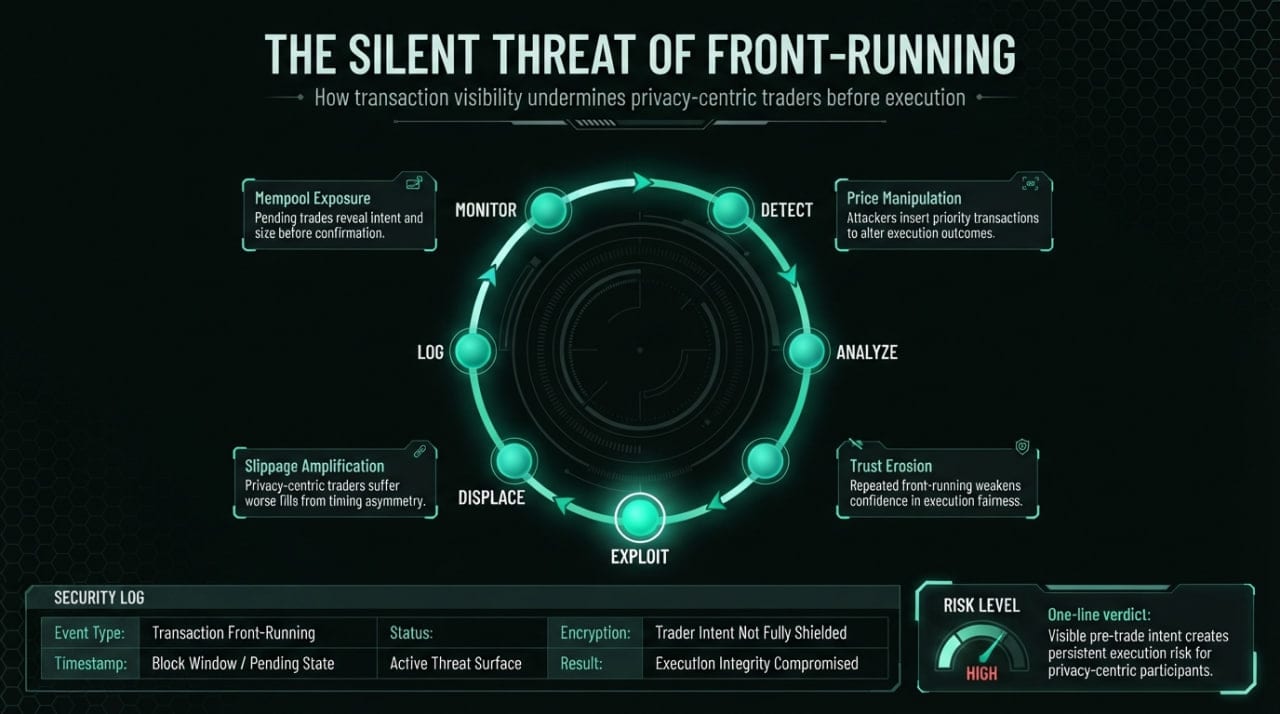 Security & SafetyThe Silent Threat of Front-Running: Understanding Its Impact on Privacy-Centric Traders
July 7, 2026 · 8 min read
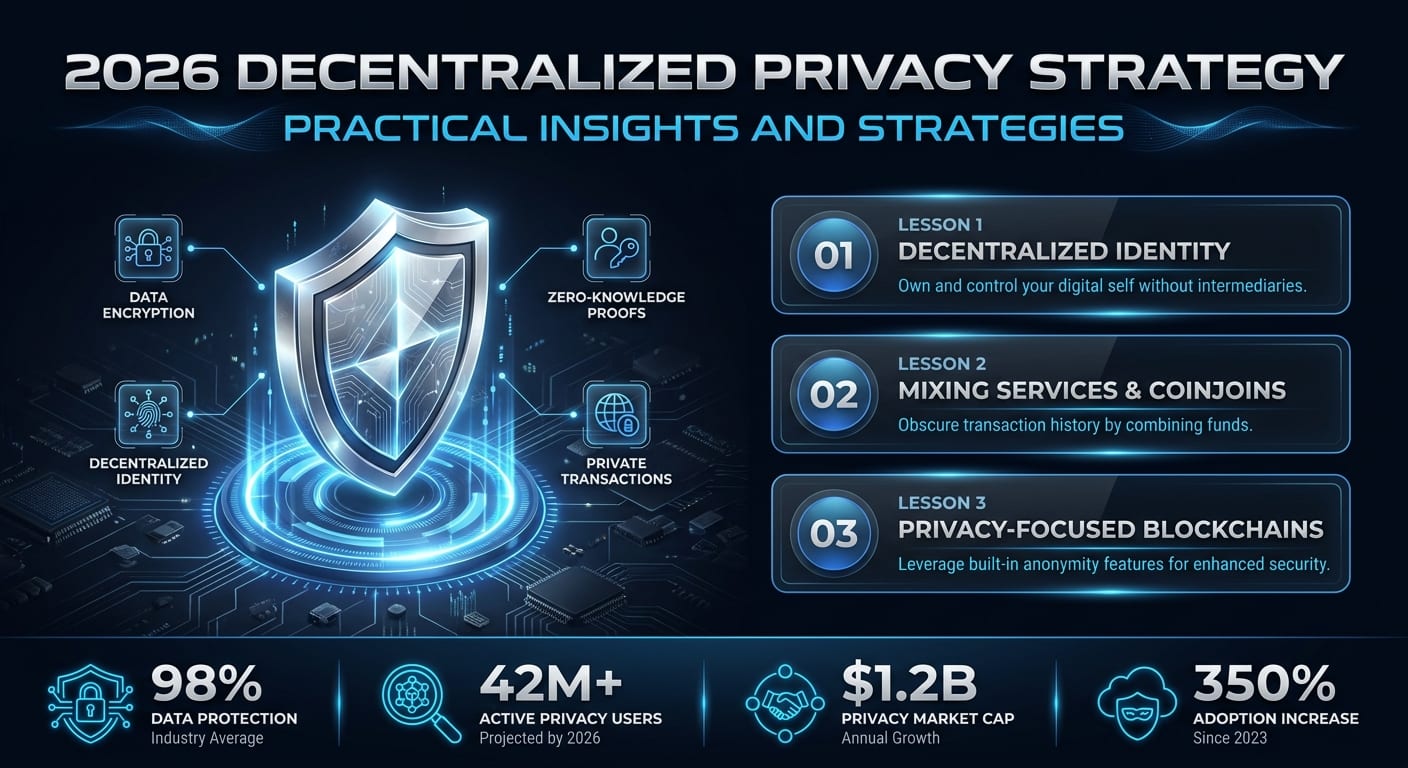 Education2026 Decentralized Privacy Strategy: Practical Insights and Strategies
July 6, 2026 · 8 min read
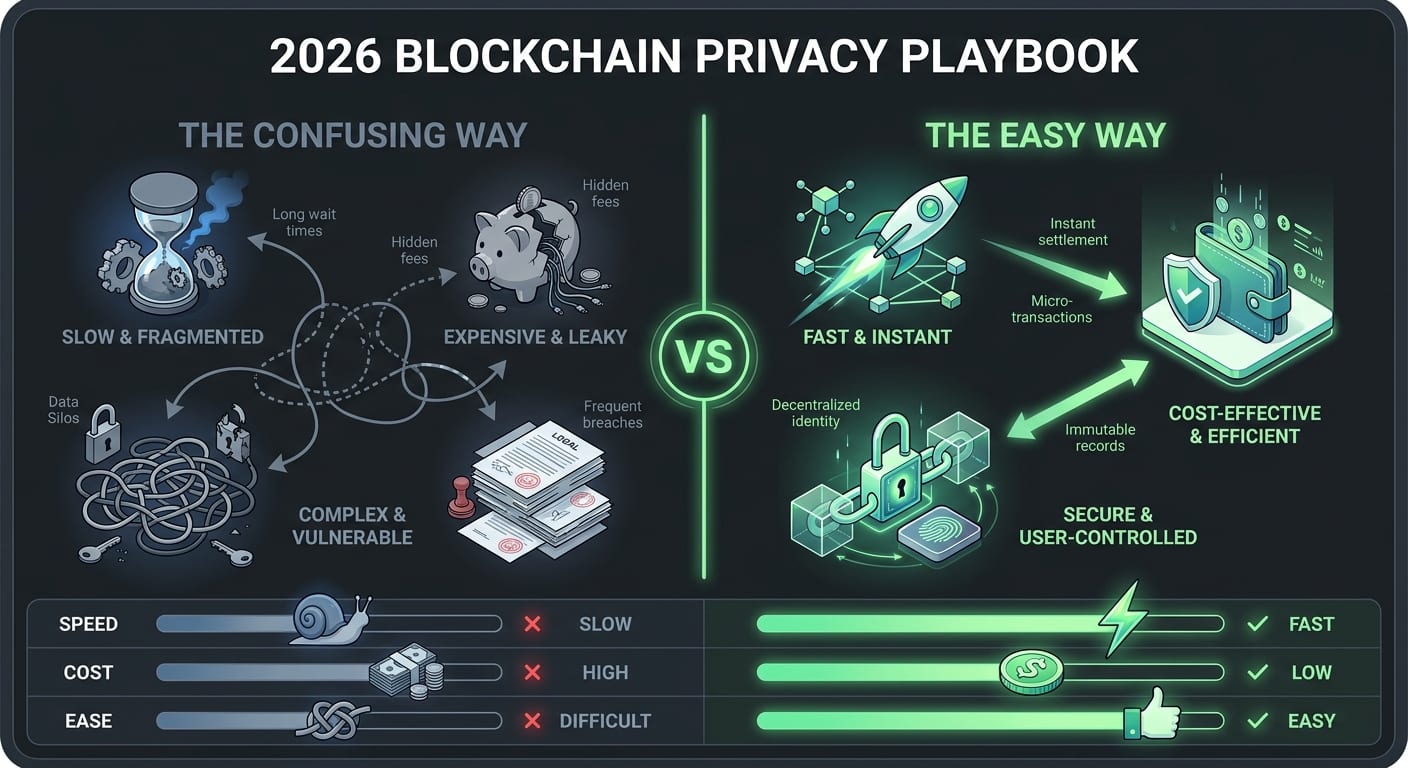 Crypto Basics / Beginners2026 Blockchain Privacy Playbook: Essential Insights and Strategies
July 5, 2026 · 8 min read