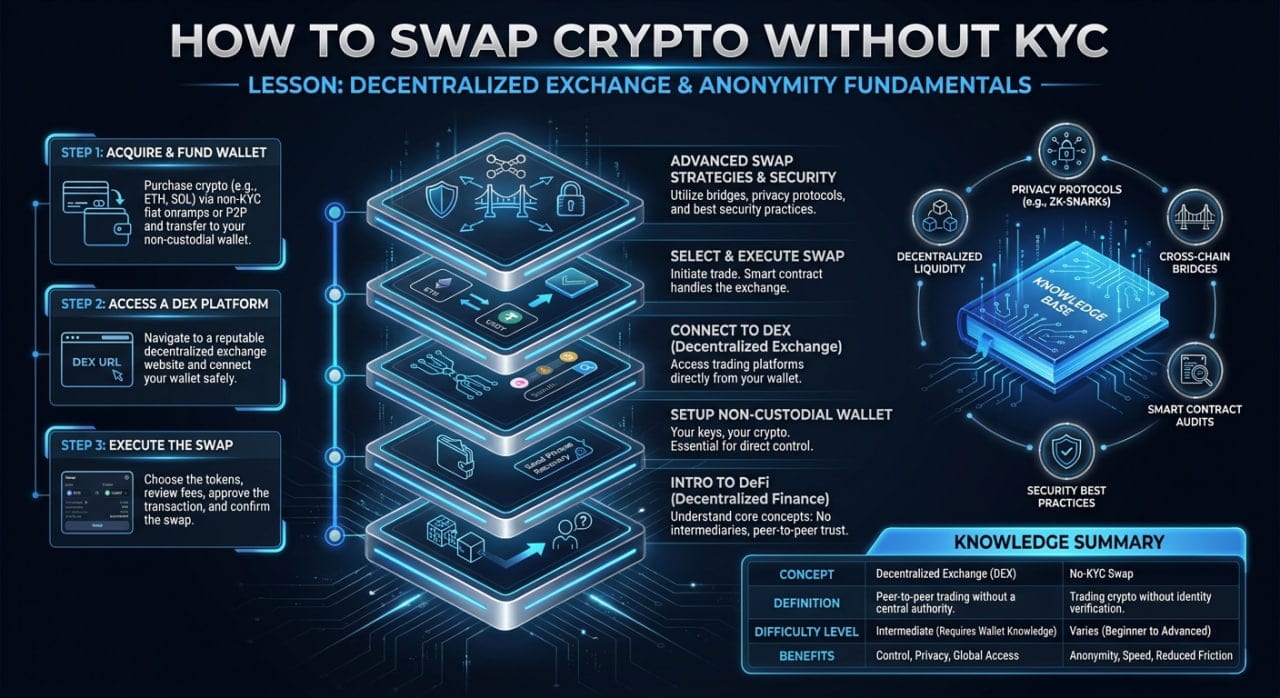
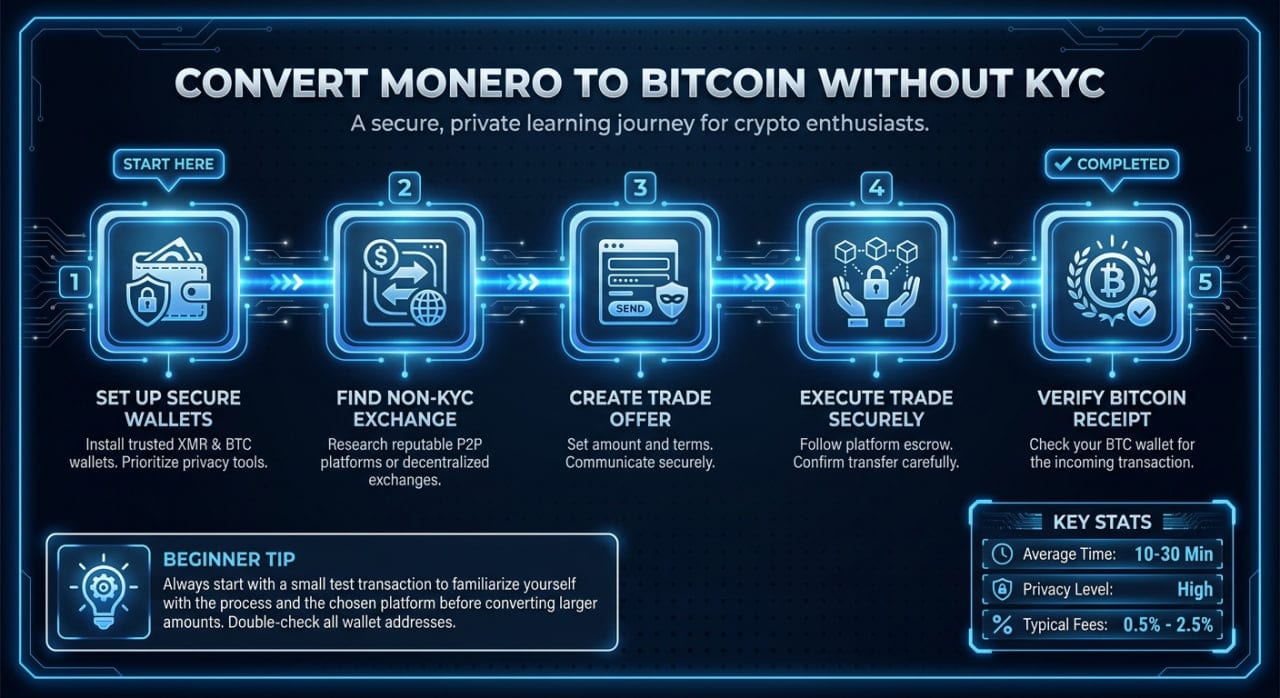
Are Crypto Swaps Anonymous? The Hard Truth
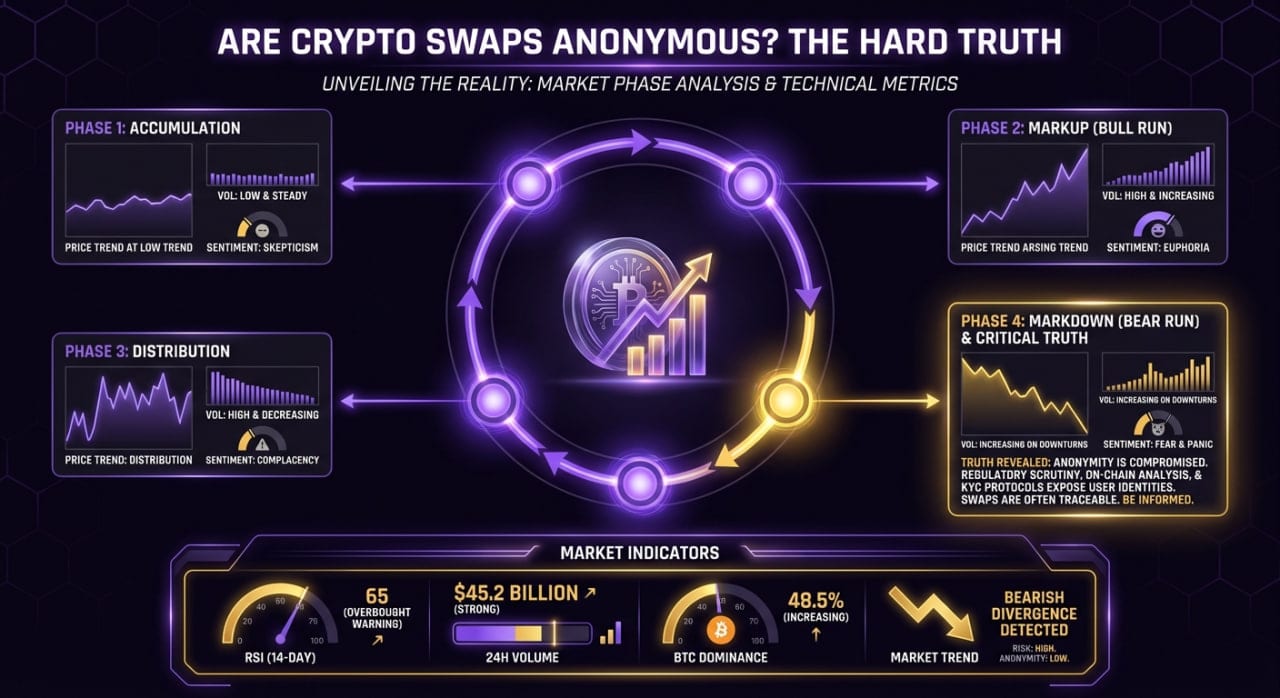
If you are wondering, "are crypto swaps anonymous?", the short answer is no. While many instant swap services do not require your name or ID, the underlying blockchains still record a permanent, public link between your sending and receiving wallets. True anonymity requires breaking that on-chain link, which standard cross-chain swaps simply do not do.
Are Crypto Swaps Anonymous On-Chain?
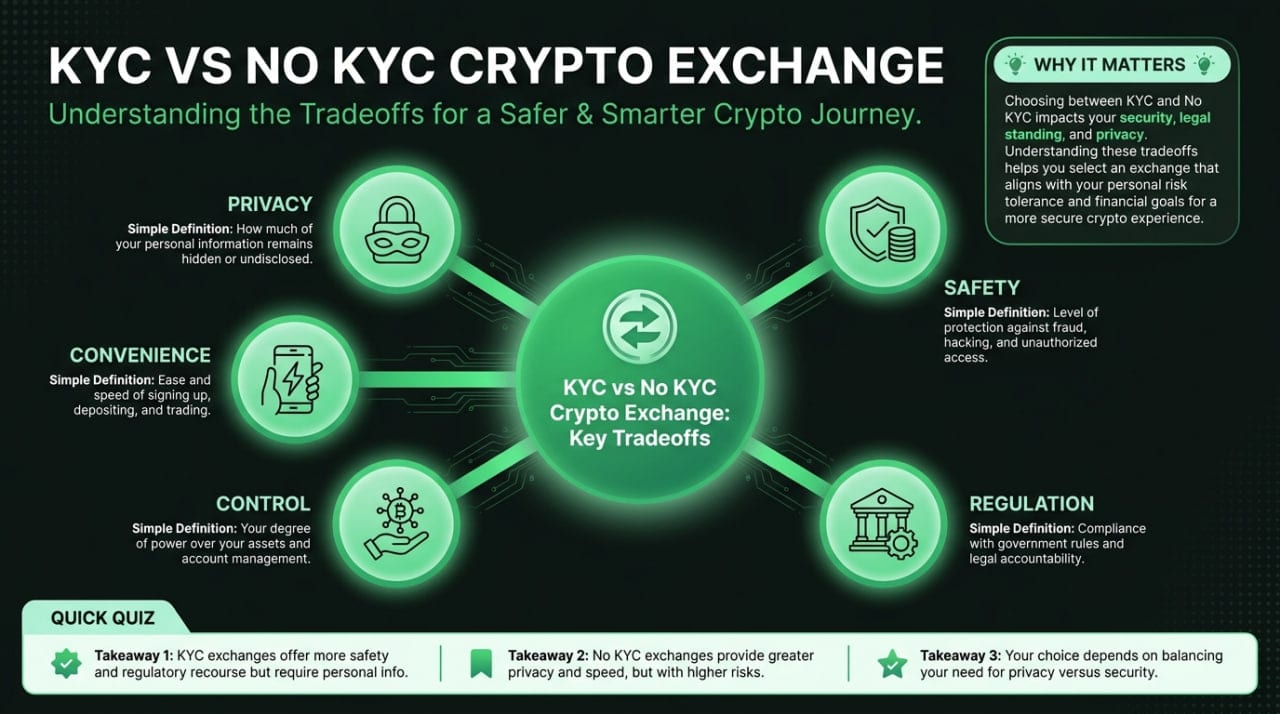
To understand your actual privacy level, you have to separate identity verification from blockchain mechanics. A No-KYC platform means you do not hand over your driver's license, email address, or physical location. This protects you from centralized database hacks and traditional identity theft.
However, anonymity means no one can trace your financial actions back to you. Because public blockchains like Bitcoin and Ethereum are open ledgers, anyone can follow the money from your starting wallet to your destination wallet. If your starting wallet is already linked to your real identity from a previous centralized exchange withdrawal, your swap is not anonymous.
The Difference Between No-KYC and True Privacy
When you use a non-custodial service like MistySwap, you generate a temporary deposit address for your trade. You send your funds, the platform processes the exchange, and the new coins arrive in your destination wallet. If you want to understand the exact routing mechanics, you can review how the swap process works.
This process is highly private regarding your real-world identity, but it is entirely transparent on-chain. Blockchain analysis tools do not need your name to track your funds. They simply correlate the exact amount and timestamp of your deposit with the exact amount and timestamp of the payout.
The On-Chain Link: What Blockchain Analysis Sees
Let's say you decide to swap BTC to ETH using a decentralized or instant exchange. You send 0.1 BTC to the provider's deposit address, and ten minutes later, 1.8 ETH arrives in your Ethereum wallet. Chain surveillance firms use clustering algorithms to spot these exact volume and timing correlations across different networks automatically.
Even though the swap crossed two completely different blockchains, the link between your Bitcoin address and your Ethereum address is now permanently established. If an analyst knows you own the Bitcoin address, they now know you own the Ethereum address. The swap obscured the asset type, but it did not hide the trail.
How to Make Crypto Swaps More Anonymous
If you want to maximize your privacy while swapping assets, you need to manage your wallet hygiene carefully. Treat every transaction as a potential link between your past and future financial activity. Here are the core rules for maintaining operational security during a swap:
- Never reuse addresses: Generate a fresh receiving address for every single swap payout to prevent balance clustering.
- Isolate your wallets: Keep funds bought on regulated exchanges in completely separate wallets from your peer-to-peer funds.
- Watch your timing: Avoid swapping exact, highly specific amounts (like 1.23456 BTC) which makes cross-chain correlation trivial for algorithms.
- Hide your IP address: Broadcast your transactions through your own node or over a VPN to prevent node operators from logging your physical location.
- Use separate networks: Avoid consolidating funds from different swap sources into a single hardware wallet account to pay for a large purchase.
The Role of Privacy Coins in Breaking the Link
The only mathematical way to break the deterministic link between an input and an output is by routing the swap through a privacy network. Coins like Monero (XMR) use ring signatures and stealth addresses to obscure the sender, receiver, and transaction amount at the protocol level. Standard public ledgers simply cannot do this.
If you swap BTC to USDT directly, the correlation is public and permanent. However, if you swap Bitcoin for Monero, move that Monero to a completely new wallet, and then swap it for USDT, you break the chain of custody. Without a privacy coin acting as a cryptographic shield in the middle, your swap history remains an open book to anyone who knows where to look.
FAQ
Do No-KYC crypto swaps hide my IP address?
No, standard swap platforms and decentralized exchanges log IP addresses for basic DDOS protection and server routing. If you want to hide your physical location, you must use a reliable VPN or route your connection through the Tor network before accessing the swap interface.
Can blockchain analysis track cross-chain swaps?
Yes. Chain surveillance firms use timing analysis and amount correlation to track funds across different blockchains. If you send exactly 1 BTC and receive an equivalent amount of ETH a few minutes later, algorithms automatically flag those two addresses as belonging to the same entity.
Are decentralized exchanges (DEXs) completely anonymous?
DEXs are permissionless, meaning they do not ask for your identity, but they are not anonymous. Every trade you make on a DEX is recorded permanently on a public smart contract. Anyone can view your entire trading history, wallet balance, and the exact network costs associated with your trades.
Informational only — not financial, legal, or tax advice.