Is Bitcoin Traceable? How Chain Analysis Works
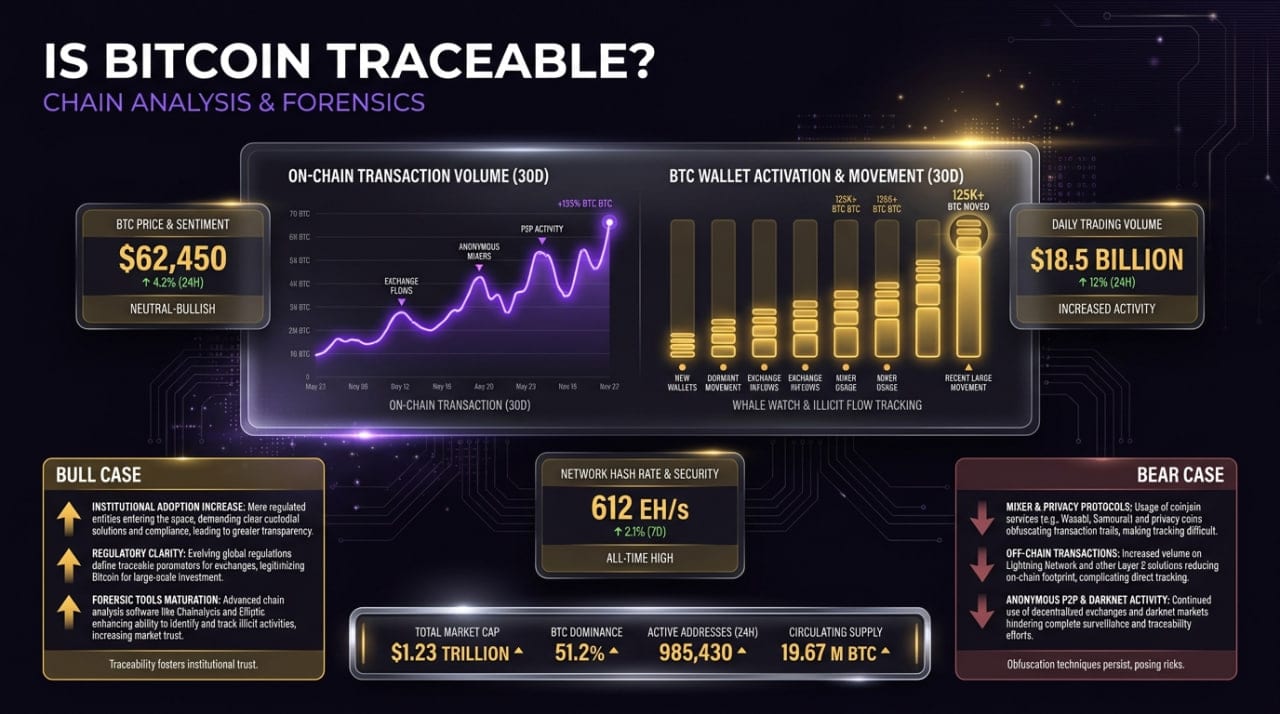
If you are wondering, is Bitcoin traceable, the short answer is yes. Bitcoin is pseudonymous, meaning your transactions are tied to a public address rather than your real name. However, because the entire transaction history is permanently recorded on a public ledger, anyone can trace the flow of funds and potentially link those addresses to your real-world identity.
Why Is Bitcoin Traceable? The Public Ledger Explained
Every Bitcoin transaction ever made sits on a distributed database called the blockchain. When you send or receive funds, the network records the sender's address, the receiver's address, the exact amount, and the timestamp. Anyone with an internet connection can view this data using a block explorer. Because this ledger is permanent and completely transparent, your financial privacy relies entirely on keeping your real name disconnected from your Bitcoin addresses.
How Chain Analysis Tracks Your Bitcoin
Chain analysis firms use specialized software to map out the Bitcoin network and cluster addresses together. They do this by analyzing Unspent Transaction Outputs (UTXOs), which function a lot like physical cash. If you buy a $5 coffee with a $20 bill, you get $15 back in change. Bitcoin works the same way: if you send 0.1 BTC from a 0.5 BTC address, the network sends 0.1 BTC to the recipient and returns 0.4 BTC to a new change address in your wallet.
Observers track these change addresses to follow your funds across the blockchain. They also look for address reuse and common input ownership. If a user combines funds from three different addresses to pay for a single large transaction, chain analysis heuristics assume all three addresses belong to the same person. Over time, these assumptions build a highly accurate map of a user's wallet cluster.
The KYC Trap: Linking Real Identities to Wallets
The biggest threat to your privacy is the Know Your Customer (KYC) process at centralized exchanges. When you buy Bitcoin on a regulated platform, you hand over your ID, home address, and bank details. The exchange logs the exact withdrawal address you use to move funds into self-custody. From that moment on, your real identity is permanently linked to that starting address.
If you later send those funds to a hardware wallet or pay for a service, chain analysis tools can trace the path right back to your initial exchange withdrawal. Furthermore, if you broadcast transactions from your home internet connection without running your own node or using a VPN, your IP address can leak to network observers, adding another layer of identity tracking.
How to Break the Link: Is Bitcoin Traceable After a Swap?
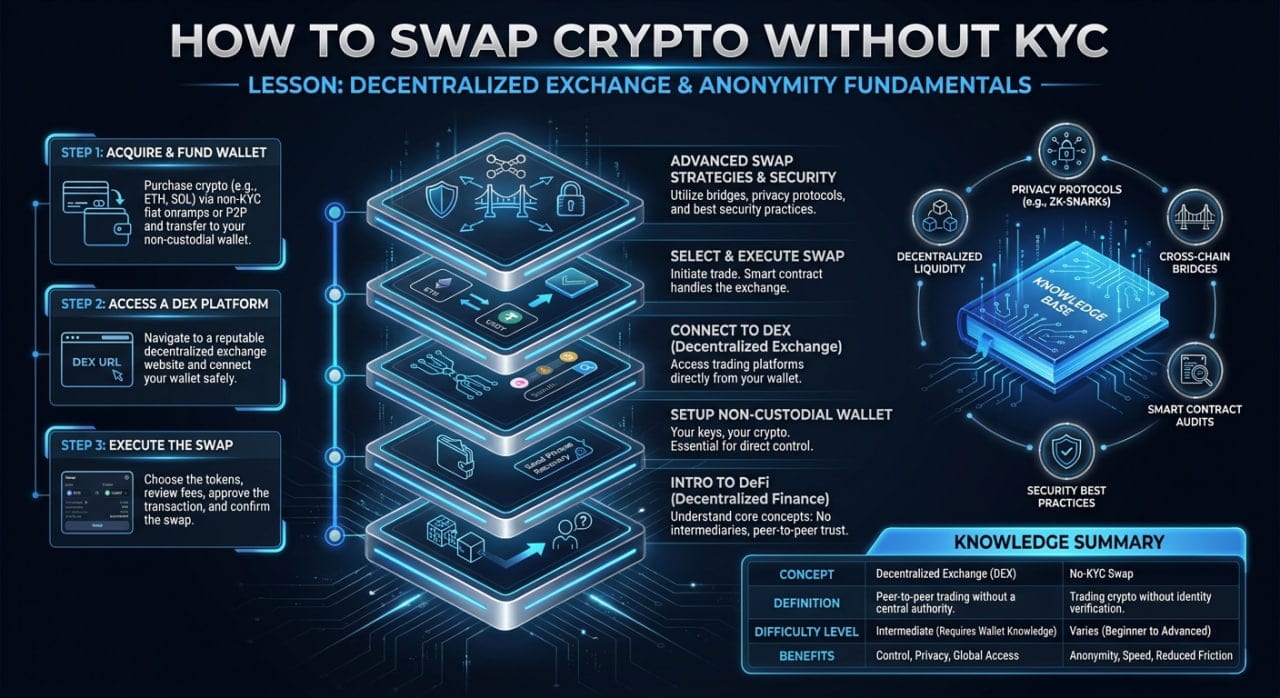
Once your identity is tied to a wallet, breaking that link requires moving funds outside the transparent Bitcoin ledger. Many privacy-conscious users swap their Bitcoin for other assets on different networks to obscure the trail. If you use a non-custodial service like MistySwap, how the swap process works ensures you do not hand over personal data. You simply send a deposit from your wallet and receive the new asset at a fresh, unlinked address.
Here is a basic checklist to protect your Bitcoin privacy:
- Never reuse addresses: Generate a fresh receiving address for every single transaction.
- Avoid KYC platforms: Buy and sell using peer-to-peer markets or no-KYC exchanges.
- Run your own node: Broadcasting transactions through your own node prevents third parties from logging your IP address.
- Use cross-chain swaps: Swap your BTC for other assets, like when you swap BTC to ETH, using no-KYC bridges to break the on-chain link.
- Practice coin control: Manually select which UTXOs you spend so you do not accidentally combine anonymous funds with KYC-tainted funds.
FAQ
Can the government track Bitcoin?
Yes, government agencies actively use advanced chain analysis software to track Bitcoin transactions. They routinely subpoena centralized exchanges to match public wallet addresses with the real-world identities collected during the KYC process.
Does using a new address for every transaction hide my identity?
Using a new address helps, but it is not a complete privacy solution. If you eventually combine funds from multiple addresses to make a large purchase, chain analysis heuristics will cluster those addresses together and assume they belong to the same entity.
Is Bitcoin traceable if I move it to a cold wallet?
Moving funds to a cold wallet secures your private keys, but it does nothing to hide your transaction history. The transfer from your hot wallet or exchange to your cold wallet is still fully visible on the public blockchain.
How can I swap Bitcoin without exposing my identity?
You can use non-custodial, no-KYC swap platforms that do not require accounts or ID verification. For example, if you want to swap BTC to USDT, you can use a privacy-preserving routing service that simply exchanges the assets between your self-custody wallets without logging your personal data.
Informational only — not financial, legal, or tax advice.