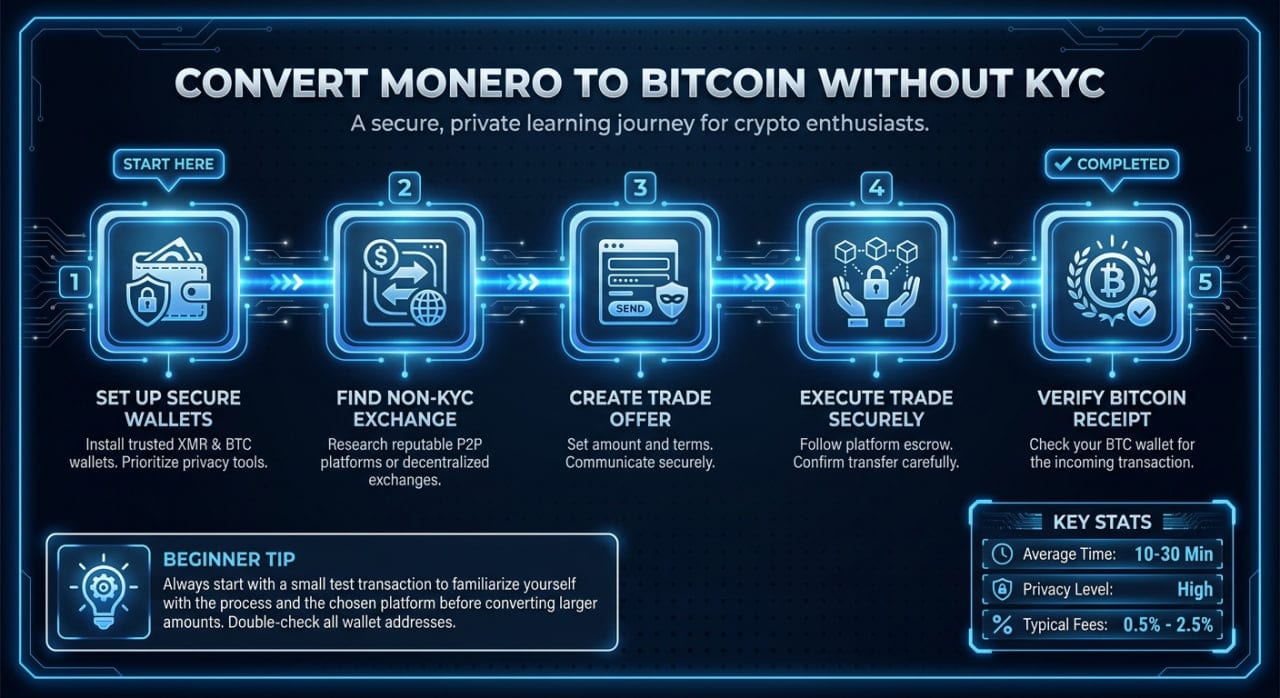
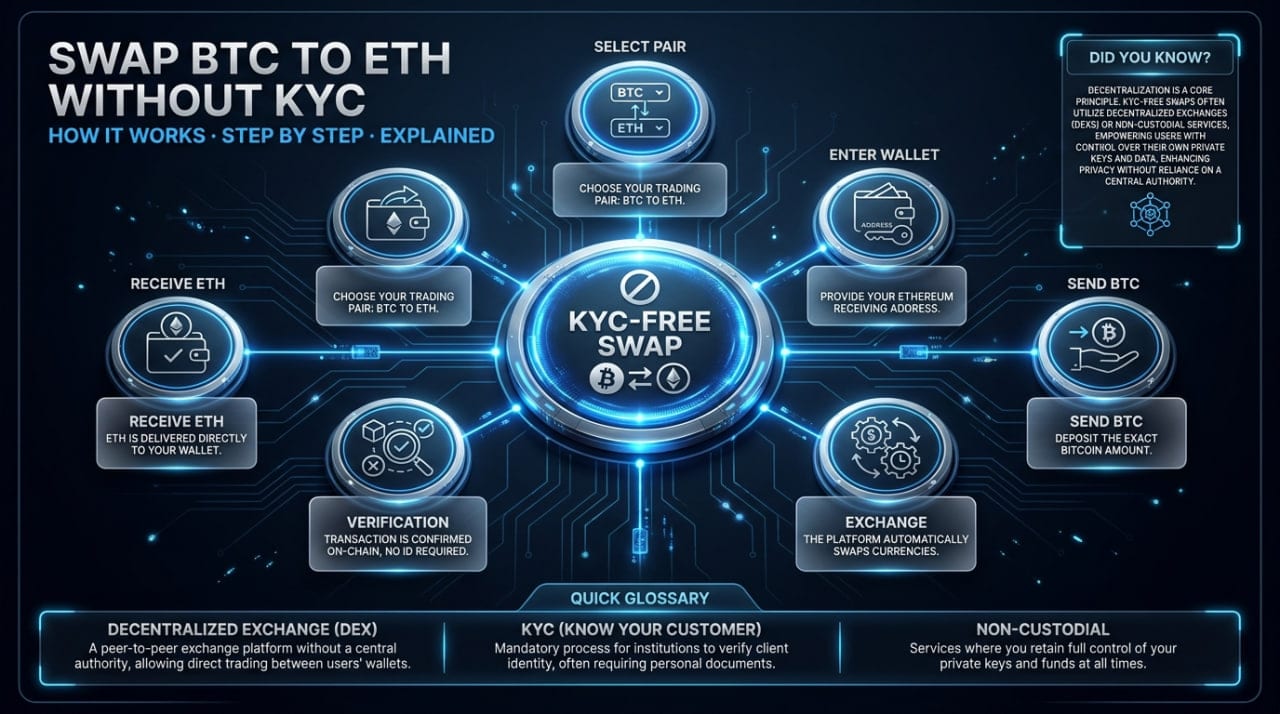
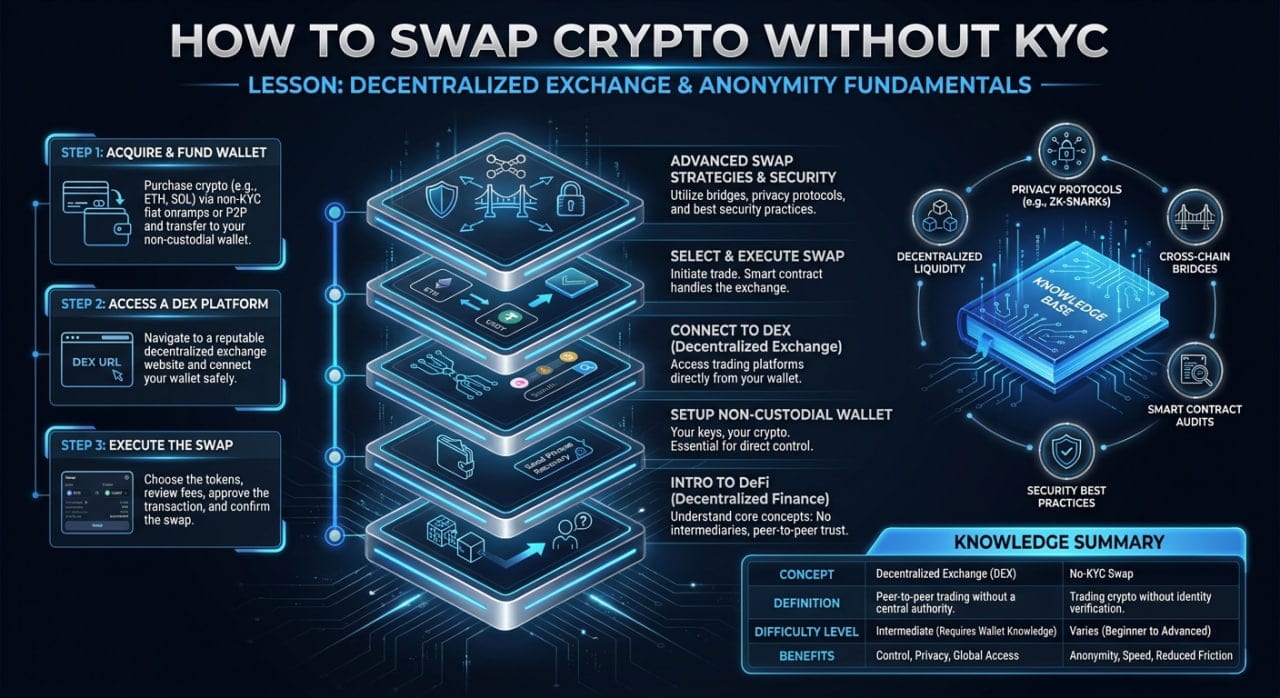
Convert Zcash to Bitcoin Without KYC
If you hold ZEC in a self-custody wallet and need to convert Zcash to Bitcoin without relying on a centralized exchange, you can use a non-custodial swap service. This process allows you to exchange your privacy coins directly to a fresh Bitcoin address, entirely bypassing account registration and identity verification.
Why Centralized Exchanges Make Zcash Difficult to Trade
Centralized platforms have increasingly delisted Zcash or heavily restricted its functionality to comply with the FATF Travel Rule and other regulatory pressures. Many exchanges flag deposits originating from privacy-centric sources, often freezing user funds until they provide extensive proof of the source of wealth. This creates severe liquidity bottlenecks for privacy-conscious users.
Even platforms that still support ZEC frequently refuse to process transactions from shielded addresses (z-addresses). They force users to rely on transparent addresses (t-addresses), which exposes financial history on the public ledger and defeats the core purpose of holding a privacy coin.
A non-custodial swap approach solves this friction. By facilitating direct wallet-to-wallet trades without a middleman demanding your ID, you can move out of Zcash and into the deeper liquidity of Bitcoin on your own terms.
How to Convert Zcash to Bitcoin (Step-by-Step)
To swap ZEC to BTC securely, you need a Zcash wallet with your funds, a receiving Bitcoin wallet, and a no-KYC swap provider like MistySwap. Because non-custodial exchanges do not hold your funds, you remain in control of your private keys throughout the entire process. Understanding how the swap process works is straightforward: you send your deposit, and the backend routes the converted asset directly back to your custody.
Follow these steps to complete the exchange:
- Generate a new, completely unused Bitcoin address in your self-custody wallet to receive the funds.
- Enter the amount of Zcash you want to exchange on the swap platform to generate a live quote.
- Paste your new Bitcoin receiving address into the platform's destination field.
- Send your Zcash from your personal wallet to the exact deposit address displayed on the swap screen.
- Leave the swap window open while the network confirms the transaction; the service will automatically dispatch BTC to your receiving address.
Shielded vs. Transparent Addresses When Swapping ZEC to BTC
Zcash operates with two distinct address types, and understanding how they interact with swap services prevents lost funds and delayed transactions. Transparent addresses function exactly like Bitcoin, exposing the sender, receiver, and transaction amount on the public ledger. Shielded addresses encrypt this data entirely, providing complete financial anonymity using zk-SNARKs (zero-knowledge proofs).
Most non-custodial swap services require you to send your deposit to a transparent address. If your ZEC currently sits in a shielded z-address, you can still send it directly to the platform's transparent deposit address. The Zcash network handles this "deshielding" transaction natively. The zero-knowledge proof verifies you have the funds to spend without revealing your past transaction history.
However, be aware of the immediate privacy tradeoff. Deshielding your coins right before swapping means the exact amount being sent to the swap provider becomes visible on the public Zcash blockchain. The source remains private, but the destination and volume do not.
Protecting Your Privacy After Converting Zcash to Bitcoin
Bitcoin is a highly traceable, pseudonymous network. Once you convert Zcash to Bitcoin, your newly acquired BTC sits on a completely transparent ledger where anyone can trace its future movements. To maintain the financial privacy you gained by using Zcash, you must practice strict UTXO (Unspent Transaction Output) management on the Bitcoin network.
Never reuse a Bitcoin address. When you set up the swap, ensure the destination BTC address has zero transaction history. If you combine this new, unlinked UTXO with older, KYC-tainted Bitcoin in your wallet during a future transaction, blockchain surveillance tools will cluster the addresses together and de-anonymize you entirely. Use a wallet with manual coin control, such as Sparrow or Electrum, to keep these funds isolated.
If you plan to diversify further into stablecoins later, you might swap BTC to USDC using fresh deposit addresses to keep your on-chain footprint fragmented. Breaking links between transaction hops is the only way to retain privacy on transparent ledgers.
Network Fees and Confirmation Times
Moving value across two completely different blockchains involves distinct network fees. You will pay a minor Zcash miner fee from your wallet to broadcast your ZEC deposit. Meanwhile, the swap provider pays the Bitcoin miner fee to deliver your BTC. The platform calculates this routing cost into the final rate offered on the screen, which is why knowing how fees work helps you avoid surprises during periods of high Bitcoin network congestion.
Zcash blocks take roughly 75 seconds to mine. Most swap platforms require between 3 to 6 Zcash block confirmations before they consider your deposit secure enough to execute the trade. Once the swap triggers, the provider broadcasts the Bitcoin transaction to the mempool.
Because Bitcoin blocks take roughly 10 minutes to mine, you should expect the entire conversion process to take anywhere from 15 to 45 minutes before the Bitcoin is fully confirmed in your self-custody wallet. If the Bitcoin mempool is heavily congested, the final delivery phase may take longer.
FAQ
Can I send shielded Zcash directly to a swap exchange?
Yes, you can send ZEC from a shielded z-address directly to the transparent t-address provided by the swap platform. The Zcash network automatically processes this transaction. The receiving transparent address and the exact amount sent will be visible on the public block explorer, but your previous shielded history remains hidden.
Do I need an account to swap Zcash to Bitcoin?
No, true non-custodial swap services operate without user accounts, emails, or KYC verification limits. You only need a Zcash wallet to send the deposit and a Bitcoin wallet to receive the swapped funds. The exchange executes programmatically without a centralized entity holding your assets long-term.
What happens if I send the wrong amount of ZEC?
If you send an amount different from what you initially specified, the swap service will typically recalculate the exchange rate based on the actual deposit received and execute the swap. However, if the amount you send falls below the platform's minimum swap threshold, the transaction will stall or fail. Always verify minimum limits before initiating the transfer.
How do I prove I made the swap if there is no account?
Every non-custodial swap generates a unique Order ID or transaction hash upon creation. You must save this ID before sending your Zcash deposit. If there is a network delay, an underpaid deposit, or an error, providing this Order ID to the platform's support team is the only way they can locate and resolve your transaction.
Can I reverse a Zcash to Bitcoin swap?
No, blockchain transactions are mathematically irreversible. Once you send your Zcash and the swap provider dispatches the Bitcoin to the address you provided, the process cannot be undone. Always double-check your Bitcoin receiving address for typos or clipboard hijacking malware before confirming the swap.
Informational only — not financial, legal, or tax advice.