The Best Way to Store Seed Phrase Safely
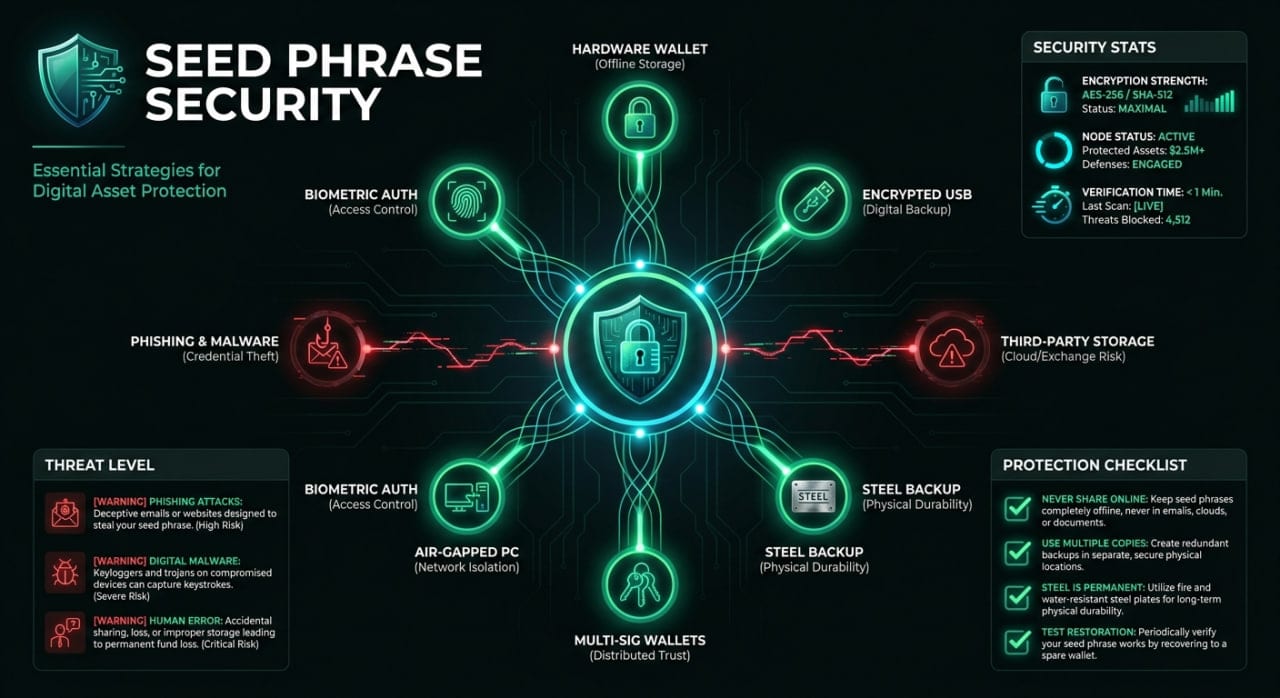
The best way to store a seed phrase is to stamp it into a fireproof, waterproof steel plate and hide it in a physically secure location. Keeping your recovery words completely offline eliminates the risk of remote hacking, while using solid metal prevents destruction from house fires or floods.
Why the Best Way to Store Your Seed Phrase is Entirely Offline
Your seed phrase is the master cryptographic key to your cryptocurrency. Anyone who possesses these 12 or 24 words can recreate your wallet on their own device and drain your funds instantly. Because malware and keyloggers routinely scan computers and phones for strings of words resembling crypto backups, digital storage is a massive vulnerability. The moment your backup touches an internet-connected device, you compromise the entire security model of self-custody.
You should never type your seed phrase into a password manager, save it in a cloud document, or take a photograph of it with your smartphone. Cloud storage providers routinely scan uploaded images for text, meaning a photo of your seed phrase could easily end up in a plaintext database on a corporate server. Furthermore, clipboard-hijacking malware monitors your copy-and-paste history specifically for crypto-related data. To maintain true security, your recovery phrase must remain entirely in the physical world.
Comparing Physical Storage Methods
Since digital storage is out of the question, you must rely on physical mediums to secure your keys. Most hardware wallets provide a piece of cardboard to write down your words during the initial setup phase. While paper is a fine temporary solution for the first few days, it degrades over time, burns easily, and turns to mush if exposed to high humidity or water. Ink can also fade over the years, leaving you with a blank piece of paper when you finally need to recover your wallet.
To truly protect your funds from environmental hazards, you need a resilient backup strategy. If you are setting up a new self-custodial wallet, follow these exact steps to secure your backup:
- Write the 12 or 24 words on paper during the initial hardware wallet setup.
- Verify the words on your hardware wallet screen to ensure perfect spelling and order.
- Transfer the words from the paper onto a stainless steel backup device.
- Destroy the original paper copy completely by burning or cross-cut shredding it.
- Store the steel backup in a secure physical location like a home safe or safety deposit box.
How to Secure Your Seed Phrase on Steel
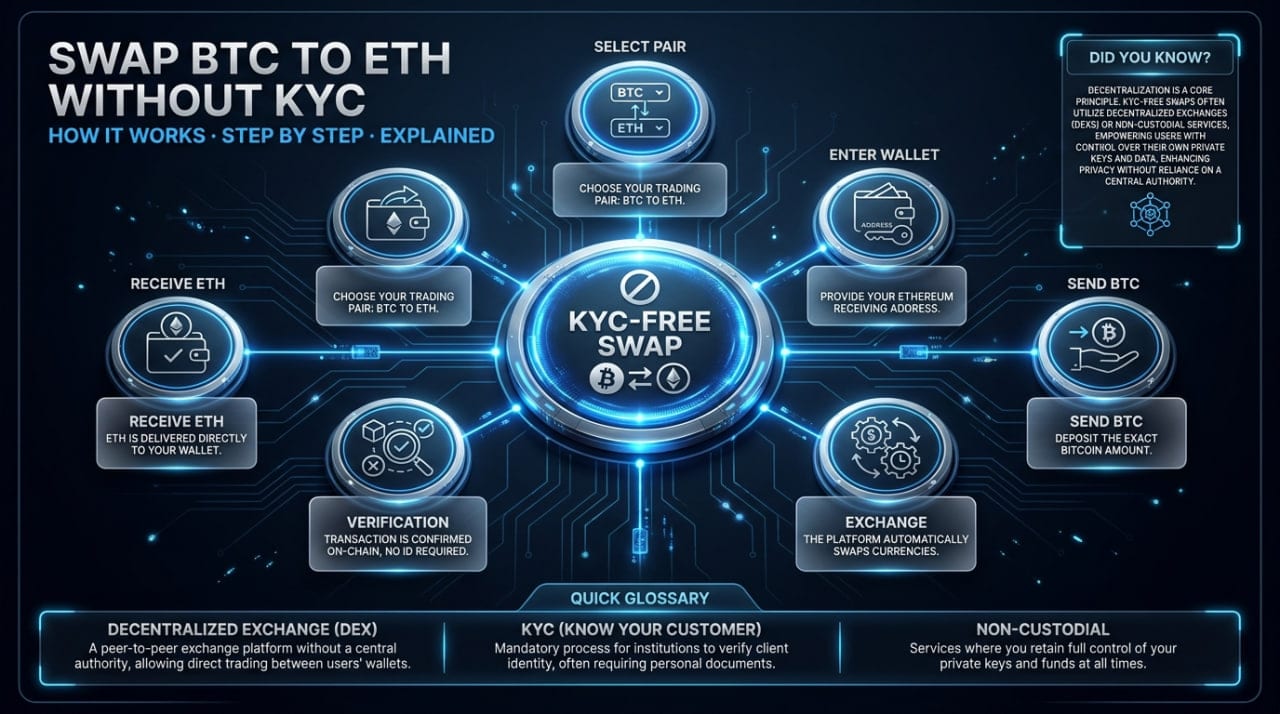
Upgrading from paper to solid metal is the most practical improvement you can make to your physical security setup. Stainless steel or titanium plates withstand extreme temperatures, easily resisting standard house fires that typically reach around 1,500°F (815°C). They also survive floods, high humidity, and physical crushing that would destroy paper or plastic. When you hold your own keys securely on metal, you can interact directly with decentralized protocols or use non-custodial services like MistySwap to swap BTC to ETH without ever depositing funds into a centralized exchange.
You generally have two options for metal backups: stamping kits and tile systems. Stamping requires you to physically hammer each letter into a steel plate using a metal punch and a heavy hammer. Tile systems let you slide pre-engraved metal letters into a track and lock them in place with screws or a sliding cover.
Stamping is cheaper and leaves a permanent indentation that cannot be scrambled if the device is dropped or exposed to extreme heat. Tile systems are easier to set up but carry a slight risk of the tiles falling out and scrambling your words if the locking mechanism fails under thermal expansion. Note that the BIP39 word list is designed so that you only need the first four letters of each word to uniquely identify it, saving you time when stamping.
Advanced Strategies for Seed Phrase Storage
If you hold a significant amount of wealth in crypto, a single steel plate might feel like a single point of failure. Someone discovering your physical backup could still steal your funds if they gain access to your home or safe. To mitigate this physical risk, many users add a BIP39 passphrase, often referred to as a "25th word."
A passphrase acts as an additional, custom string of characters attached to your standard seed phrase. Without this specific passphrase, the original 12 or 24 words will only open an empty decoy wallet. You can store your steel seed phrase in one location and memorize your passphrase or store it in a completely separate physical location. Maintaining strict self-custody with a passphrase ensures your privacy remains intact, which is highly beneficial when you learn how the swap process works on No-KYC platforms.
Another advanced method is Shamir's Secret Sharing (SSS), which mathematically divides your seed phrase into multiple shares. You might create five shares and require any three of them to reconstruct the wallet. This protects against both theft and loss, but it requires specific hardware wallet support and is significantly more complex to set up correctly.
What to Avoid When Backing Up Your Recovery Phrase
Many users try to outsmart thieves by inventing their own physical encryption methods, which almost always results in locking themselves out. Never scramble the order of your words, write them backwards, or substitute words based on a personal cipher. If you forget your clever system years later, or if you pass away and your heirs try to recover the funds, the crypto is gone forever.
Additionally, do not split a standard seed phrase in half, storing words 1-12 in one place and 13-24 in another. If you lose one half, the entire wallet is unrecoverable. Splitting also weakens the cryptographic security of the phrase, making it easier for a sophisticated attacker to brute-force the remaining words if they find one piece. Whether you hold Bitcoin long-term or frequently swap BTC to USDC to preserve capital, stick to proven methods: a full seed phrase on steel, optionally protected by a separate BIP39 passphrase.
FAQ
Can I just memorize my seed phrase?
Memorizing your seed phrase (often called a "brain wallet") is highly discouraged as a primary backup. Human memory is fallible, and a head injury, illness, or the simple passage of time can cause you to forget the exact sequence. Always keep a physical backup on steel, even if you choose to memorize the words as a secondary measure.
Should I store my seed phrase in a bank safety deposit box?
A safety deposit box offers excellent physical security against home invasions and natural disasters. However, it introduces counterparty risk, as you must rely on the bank's operating hours and policies to access your backup. If you use a bank box, you should use a BIP39 passphrase so bank employees cannot access your funds if the box is compromised.
What happens if someone finds my physical seed phrase?
If someone finds your 12 or 24 words, they can instantly import them into their own wallet software and transfer your assets to their own addresses. This is why physical concealment and physical access controls are critical. If you suspect your backup has been discovered, you must immediately generate a new wallet and transfer your funds before the attacker does.
Does a hardware wallet protect my funds if I lose my seed phrase?
Your hardware wallet will continue to function and sign transactions even if you lose your physical seed phrase backup. However, if that hardware wallet breaks, resets, or is lost, you will have absolutely no way to recover your funds. If you lose your physical backup, you should immediately send your assets to a newly generated wallet while you still have access to the active hardware device.
Informational only — not financial, legal, or tax advice.