Always Send a Crypto Test Transaction
When you are preparing to move a large amount of digital assets, always send a crypto test transaction first to verify the route. Paying a small network fee twice might feel inefficient, but it is a vital insurance policy against losing your entire balance to a typo, network mismatch, or malware. Once a blockchain transaction is confirmed, it is irreversible, meaning that small initial transfer is the only way to guarantee your funds will arrive safely.
Why a Crypto Test Transaction is Cheap Insurance
In self-custody, you are your own bank, which means there is no customer support desk to call if you make a mistake. Many users hesitate to send a crypto test transaction because they do not want to pay network gas fees twice. If the Ethereum network is congested, paying an extra $5 or $10 just to test a route feels like an annoying waste of money. However, you must view that extra fee as a cheap insurance premium against catastrophic loss.
Risking $50,000 to save $5 on a transfer is a terrible risk-reward calculation. Once a transaction gets written to a block and confirmed by the network miners or validators, it cannot be undone. If you send funds to the wrong address, they belong to whoever controls the private keys for that destination. By sacrificing a small fee upfront, you eliminate the anxiety of watching a high-value pending transaction.
What Exactly Does a Crypto Test Transaction Verify?
A successful test transfer does more than just prove you copied a string of characters correctly. It confirms a complex chain of technical requirements between the sending wallet and the receiving destination. Blockchain architecture is unforgiving, and a failure at any of these checkpoints results in lost funds.
Here is a checklist of exactly what a test transfer verifies:
- Network compatibility: Confirms both wallets are using the exact same blockchain network (e.g., sending ERC-20 tokens on Ethereum, not Arbitrum).
- Address accuracy: Proves the destination address is active, correct, and controlled by you.
- Memo routing: Ensures any required routing numbers or destination tags for centralized exchange deposits are present and working.
- Smart contract logic: Verifies that a receiving contract accepts the specific token standard you are sending.
- Wallet syncing: Shows that your hardware or software wallet is properly syncing with the blockchain node to reflect new balances.
The Mechanics of Executing a Test Transfer
To execute a proper test run, initiate a transfer using the absolute minimum amount allowed by your wallet or exchange. Do not just wait for the transaction to show as "pending" in your local software. You should copy the transaction hash (TXID) into a block explorer like Mempool.space or Etherscan to watch the block confirmations in real-time. Once the test amount arrives in the destination wallet, verify that the balance updates correctly and that you have control over the funds.
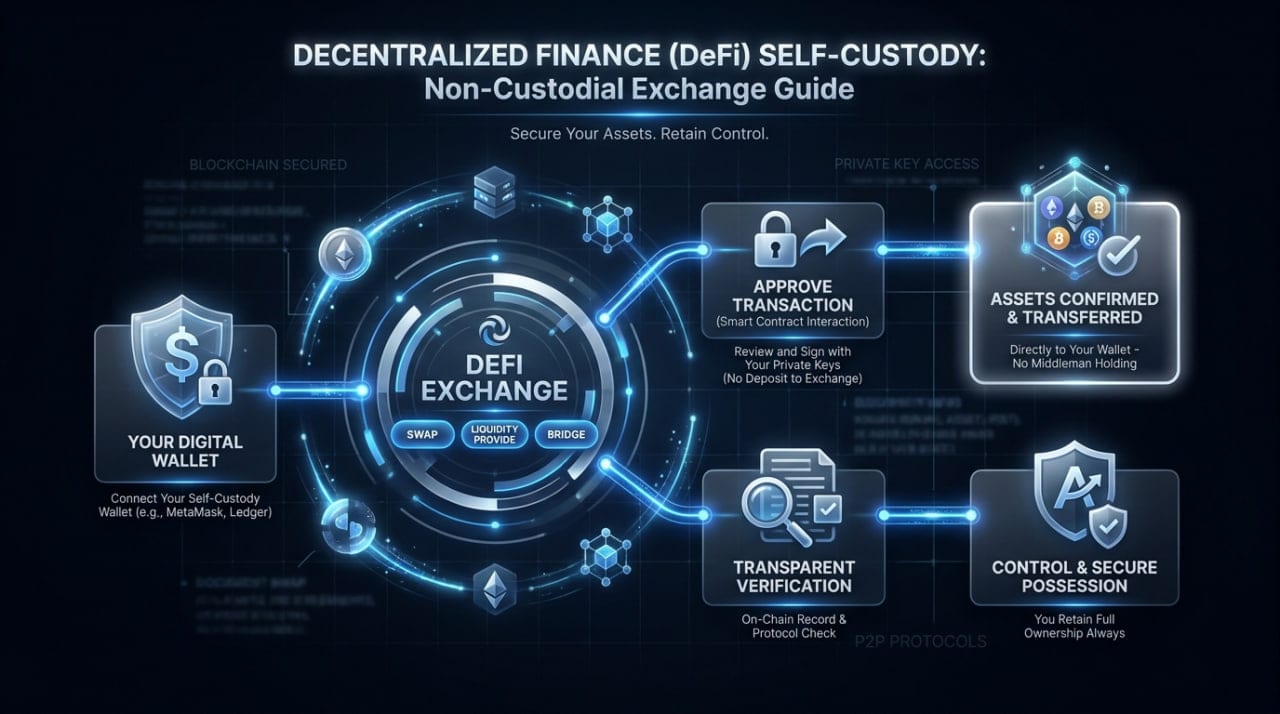
If you are using a non-custodial service like MistySwap, this logic still applies. Because the platform requires no accounts and processes trades automatically, how the swap process works relies entirely on you providing a valid payout address. When you want to swap BTC to ETH for a large amount, you can simply run a small swap first. Once the Ethereum lands safely in your self-custody wallet, you know the routing is secure and you can proceed with the primary transaction.
Defeating Clipboard Hijackers and Malware
One of the most insidious threats in self-custody is clipboard hijacking malware. These malicious programs run silently in the background of your computer or phone, monitoring your system clipboard for cryptocurrency addresses. When you copy your destination address and hit paste, the malware instantly swaps your address for the attacker's address. If you only check the first and last four characters, a sophisticated hijacker can generate a vanity address that visually matches those characters.
Sending a test transfer helps mitigate this risk, provided you physically verify the arrival of the test funds before sending the main payload. If you paste an address, send the test amount, and the funds never arrive, you immediately know your device is compromised or you made a routing error. You lose a fraction of a dollar instead of your entire portfolio.
Navigating Network Selection and Token Standards
The modern crypto ecosystem is highly fragmented, with dozens of Layer 1 and Layer 2 networks operating simultaneously. Exchanges often group these networks together in a single dropdown menu, making it incredibly easy to select the wrong network by mistake. For example, sending Tether (USDT) via the Tron network to an Ethereum ERC-20 address will result in a total loss of funds. A test transfer forces you to confirm strict network alignment.
Before sending anything, check the supported coins and networks on the receiving end to guarantee a match. If you accidentally pick the wrong network for your test transfer, the block explorer will show the transaction as successful, but your receiving wallet will remain empty. This discrepancy is the exact early warning sign the test is designed to provide.
When Can You Skip the Crypto Test Transaction?
While testing routes is a fundamental security practice, there are a few scenarios where it is safe to skip. If you utilize address whitelisting features on an exchange, the platform locks your destination address after an initial security time delay. Since you have already verified this whitelisted address in the past, testing it again is unnecessary.
You can also bypass testing when sending trivial amounts where the network fee makes up a large percentage of the total transaction. Hardware wallets with saved, cryptographic address books also reduce the need for constant testing, provided the receiving device has not been reset or lost. For all other large transfers to new addresses, always run a test.
FAQ
Do I need to send a test transaction every time?
No, you only need to run a test when sending to a new address, using a new network, or transferring an unusually large amount. If you frequently transact with a saved address in a hardware wallet, repeated tests are unnecessary.
What is a safe amount for a test transaction?
Send the smallest amount the network or exchange allows. For Bitcoin, this might be a few thousand satoshis, while for Ethereum, it could be a fraction of a dollar, plus the network gas fee. Always balance the test amount against the network fee to avoid wasting funds.
How long should I wait after sending the test?
Wait until the transaction is fully confirmed on the blockchain and the funds appear as a spendable balance in the receiving wallet. Pending transactions can still fail due to low fees or network congestion, so full confirmation is required before sending the rest.
Can a test transaction prevent a smart contract hack?
No, it only verifies the routing, address accuracy, and network compatibility of your transfer. It will not protect you if you are intentionally depositing funds into a vulnerable smart contract or a malicious decentralized application.
Informational only — not financial, legal, or tax advice.